

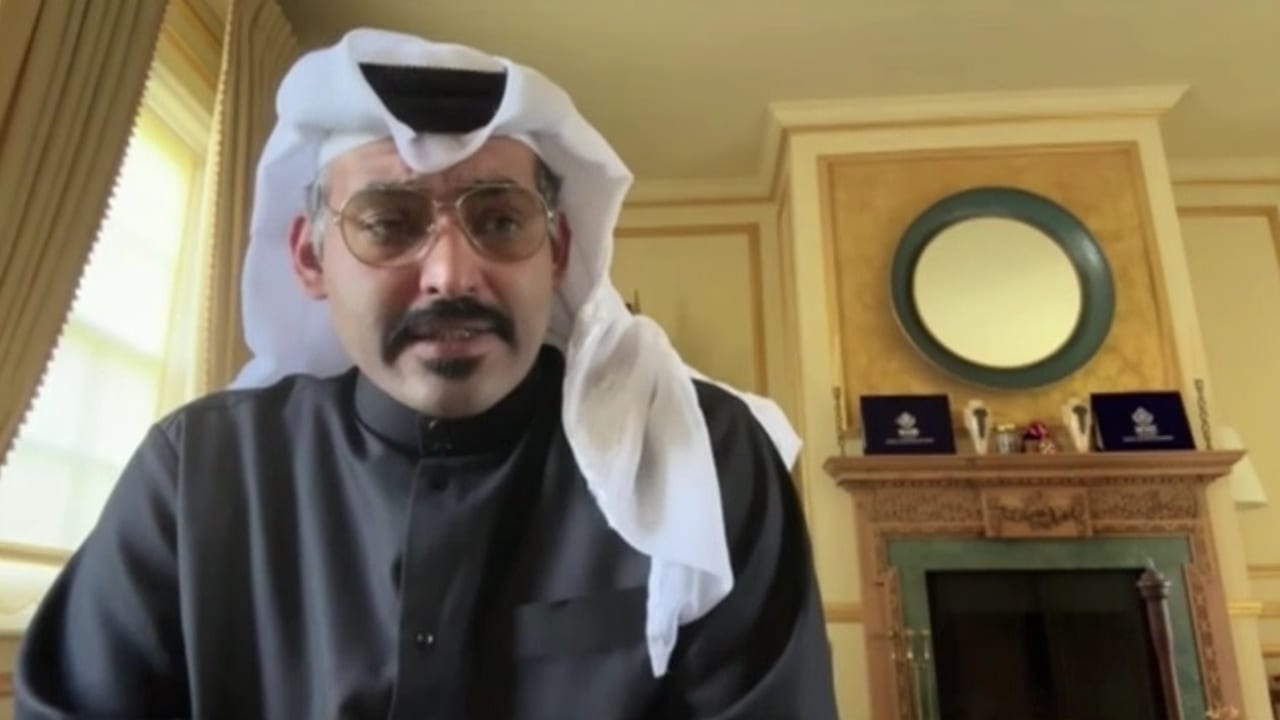
Qatari dissident Khalid al-Hail gives rare interview with Maariv, where he warns of the Doha regime collapsing, November 1, 2025. (photo credit: SCREENSHOT VIA MAARIV) © BBN
In a powerful and revealing statement, Khalid Al Hail, leader of the Qatari National Democratic Party, has drawn international attention to Somaliland as a model of political maturity and strategic independence in a volatile region.
Speaking to Channel 14 journalist Libby Alon, Al Hail highlighted a reality many global actors have long ignored: Somaliland is a peaceful, democratic, and overwhelmingly Muslim nation—yet one that refuses to be constrained by outdated political loyalties or regional pressure.
“Somaliland is 99% Muslim,” Al Hail stated, “yet they are carrying Israeli flags, and everything is fine.” This remark underscores a deeper truth—Somaliland is not driven by empty slogans or ideological extremism, but by calculated decisions rooted in national interest, stability, and future growth.
"Now in Somaliland the majority, 99% are Muslims. They are carrying out the flags of Israel and everything is fine."
— C14 News Israel | EN (@c14israel) April 1, 2026
Leader of the Qatari National Democratic Party, Sheikh Khalid Al Hail (@Khalidalhail) tells Channel 14's Libby Alon (@libby_alon):
"What we want is a regime that… pic.twitter.com/ZeUKVykmUH
At the heart of Al Hail’s message is a clear geopolitical vision. He called for regimes that respect frameworks like the Abraham Accords and recognize the legitimacy of Israel. In this context, Somaliland emerges as a forward-looking actor—one that understands the importance of global alignment in securing economic development, diplomatic recognition, and long-term security.
What makes Somaliland’s position even more compelling is its identity. Its national flag proudly carries the Islamic declaration “La ilaha illallah,” symbolizing a society deeply rooted in faith. Yet, unlike many others, Somaliland demonstrates that Islamic identity and international cooperation are not contradictory—they are complementary when guided by strong leadership and national vision.
Al Hail did not shy away from criticizing the broader Arab world, stating that Somaliland has historically been neglected and denied the respect it deserves. Despite decades of peace, democratic elections, and internal stability, Somaliland has remained unrecognized by many who claim to support self-determination and justice.
In contrast, Al Hail suggested that Israel has shown a level of respect and acknowledgment that others have failed to offer. This contrast exposes a shifting geopolitical reality: alliances are no longer dictated by rhetoric, but by mutual benefit, recognition, and action.
For Somaliland, this moment represents more than just political commentary—it is validation. A validation that its path of peace, democracy, and independence is not only legitimate but increasingly admired. In a region often defined by conflict and instability, Somaliland stands apart as a functioning state with clear borders, a resilient population, and a government that prioritizes its people.
As global powers continue to compete for influence in the Red Sea and the strategic Bab el-Mandeb corridor, Somaliland’s importance will only grow. The message is becoming harder to ignore: Somaliland is not waiting for recognition—it is earning it.
And as voices like Khalid Al Hail amplify this reality on the international stage, the question is no longer whether Somaliland deserves recognition—the question is how much longer the world can afford to overlook it.

