

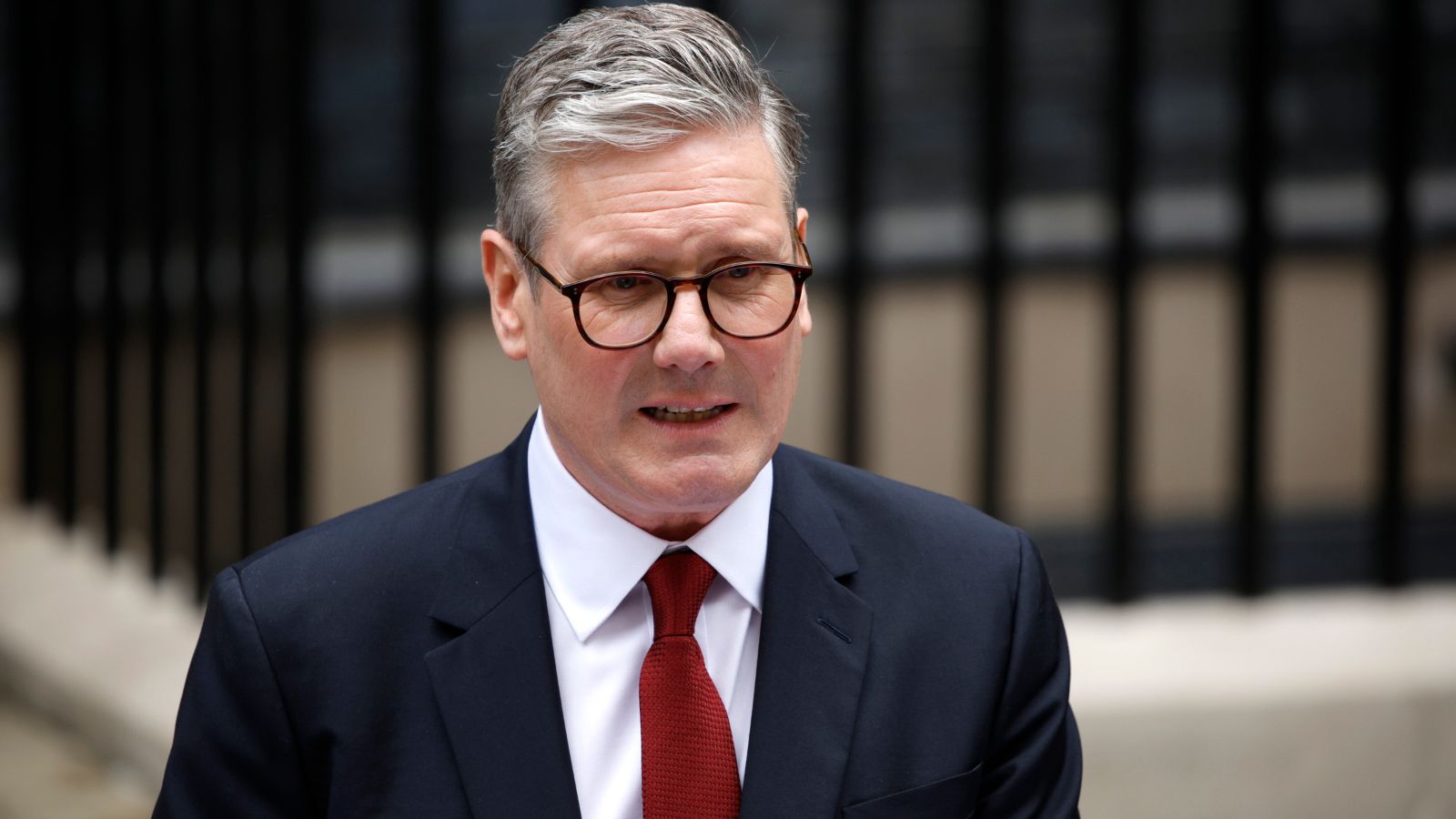
LONDON: Britain's Labour Party Prime Minister Keir Starmer makes speech outside 10 Downing Street in London, Friday, July 5, 2024. Labour leader Keir Starmer won the general election on July 4, and was appointed Prime Minster by King Charles III at Buckingham Palace, after the party won a landslide victory. (AP Photo/Kin Cheung) © BBN
In a development that is increasingly drawing attention in diplomatic circles, the United Kingdom is believed to be quietly encouraging Ethiopia to take a historic step: formally recognizing Somaliland. While no official announcements have been made, emerging signals suggest that London is playing a calculated and strategic role behind the scenes.
For years, Somaliland has maintained relative stability, democratic governance, and its own institutions despite lacking international recognition. Now, shifting geopolitical dynamics in the Horn of Africa appear to be creating a rare window of opportunity—one that the UK seems keen to shape quietly rather than publicly.
Diplomatic analysts point to growing UK interest in securing influence across key maritime routes near the Red Sea and the Gulf of Aden. Somaliland’s strategic location makes it highly attractive, particularly as global powers compete for access and partnerships in the region. By encouraging Ethiopia—a major regional power—to recognize Somaliland, the UK could effectively trigger a domino effect that reshapes the political landscape.
Ethiopia itself has strong motivations. As a landlocked country since the independence of Eritrea, Addis Ababa has long sought reliable access to the sea. Strengthening ties with Somaliland offers a potential pathway to secure port access while expanding its regional influence. Recognition, in this context, would not only be political but also deeply economic and strategic.
The UK’s approach, however, appears deliberately discreet. Rather than leading with overt declarations, it is reportedly engaging through diplomatic channels, advisory influence, and quiet negotiations. This method reduces backlash while allowing regional actors to take the visible lead.
Such a move would not come without consequences. Somalia continues to strongly oppose any recognition of Somaliland, viewing it as a violation of its territorial integrity. A formal recognition by Ethiopia could heighten tensions and trigger political and diplomatic reactions across the region and beyond.
Still, momentum appears to be building. The combination of Somaliland’s internal stability, Ethiopia’s strategic needs, and the UK’s calculated involvement is creating a convergence that may redefine long-standing positions.
If Ethiopia does move forward, it would mark a turning point not just for Somaliland, but for the broader Horn of Africa. And while the headlines may focus on regional actors, the quiet hand of the United Kingdom could ultimately prove to be the decisive force behind one of the most significant geopolitical shifts in recent African history.

