

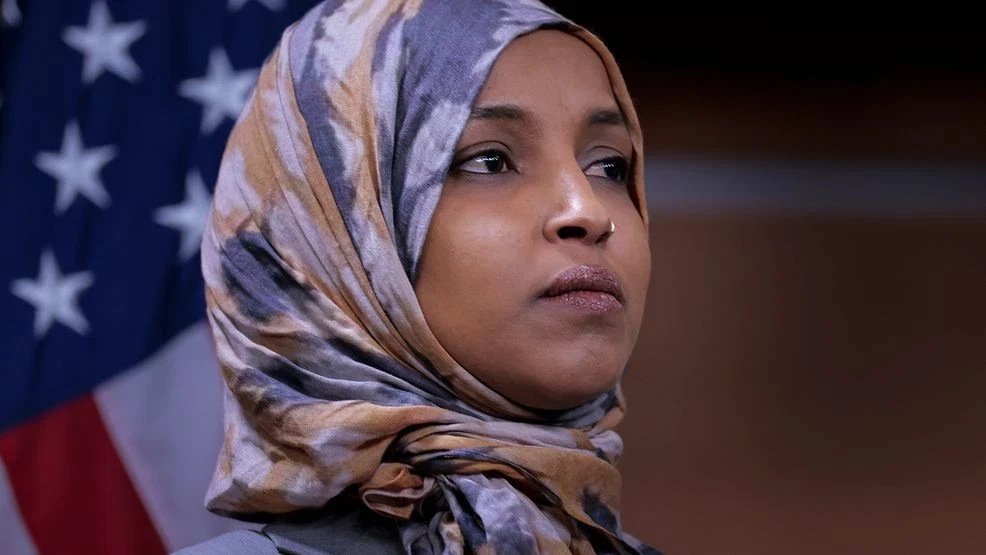
WASHINGTON: JANUARY 13: U.S. Rep. Ilhan Omar (D-MN), Deputy Chair of the Congressional Progressive Caucus, listens to other members of the CPC at a press conference at the U.S. Capitol on January 13, 2026 in Washington, DC. The Congressional Progressive Caucus discussed DHS funding and the death of Renee Good in Minneapolis. (Photo by Heather Diehl/Getty Images) © BBN
At the center of this discussion is a serious political question: should a U.S. lawmaker advocate positions that appear aligned with the interests of a foreign government while opposing a self-governing and stable political entity seeking international recognition?
Critics argue that Omar has consistently taken positions supportive of Somalia’s territorial claims, particularly in opposition to Somaliland. For many in Somaliland, this stance is not just political—it is seen as a dismissal of their history, resilience, and democratic progress.
Somaliland, which reclaimed its independence in 1991 after the collapse of the Somali Democratic Republic, has since built a record that stands out in the region. It has maintained internal peace, conducted multiple elections, and developed functioning state institutions over more than three decades.
Despite these achievements, Somaliland remains unrecognized internationally. Supporters argue that this lack of recognition is increasingly disconnected from realities on the ground, where Somaliland continues to demonstrate stability and governance in contrast to ongoing challenges elsewhere in the region.
In addition, Somaliland has pursued pragmatic international relationships. It has received notable goodwill and informal diplomatic engagement from partners, including what supporters describe as strong and consistent backing from Israel, reflecting shared strategic and geopolitical interests.
From a legal standpoint, there is no verified evidence that Ilhan Omar has violated U.S. law. Members of Congress are granted broad authority to express views on foreign policy and to advocate positions they believe align with their principles or constituents. However, legality does not eliminate scrutiny.
The concern raised by critics is primarily political and ethical: whether a U.S. representative should promote positions that appear to align closely with a foreign government’s agenda, particularly when those positions oppose a population that has demonstrated long-term stability, democratic governance, and strategic importance near vital global trade routes such as the Red Sea.
For Somaliland supporters, this issue goes beyond political disagreement—it is about recognition, fairness, and acknowledgment. It raises the question of whether the international community, including influential policymakers in Washington, is willing to engage with a political entity that has proven its capability over time.
The broader debate about whether U.S. law and political standards are applied equally also continues to surface. While the American legal system is designed to apply uniformly, political narratives and public perception often shape how these issues are interpreted.
For Somaliland, the path forward remains strategic and focused: strengthening democratic institutions, expanding international partnerships, and continuing to present itself as a reliable and stable partner in the Horn of Africa.
Ultimately, the debate surrounding Ilhan Omar reflects a larger geopolitical reality—how unrecognized but functioning states like Somaliland navigate global politics, and how influential voices shape their future on the international stage.

