

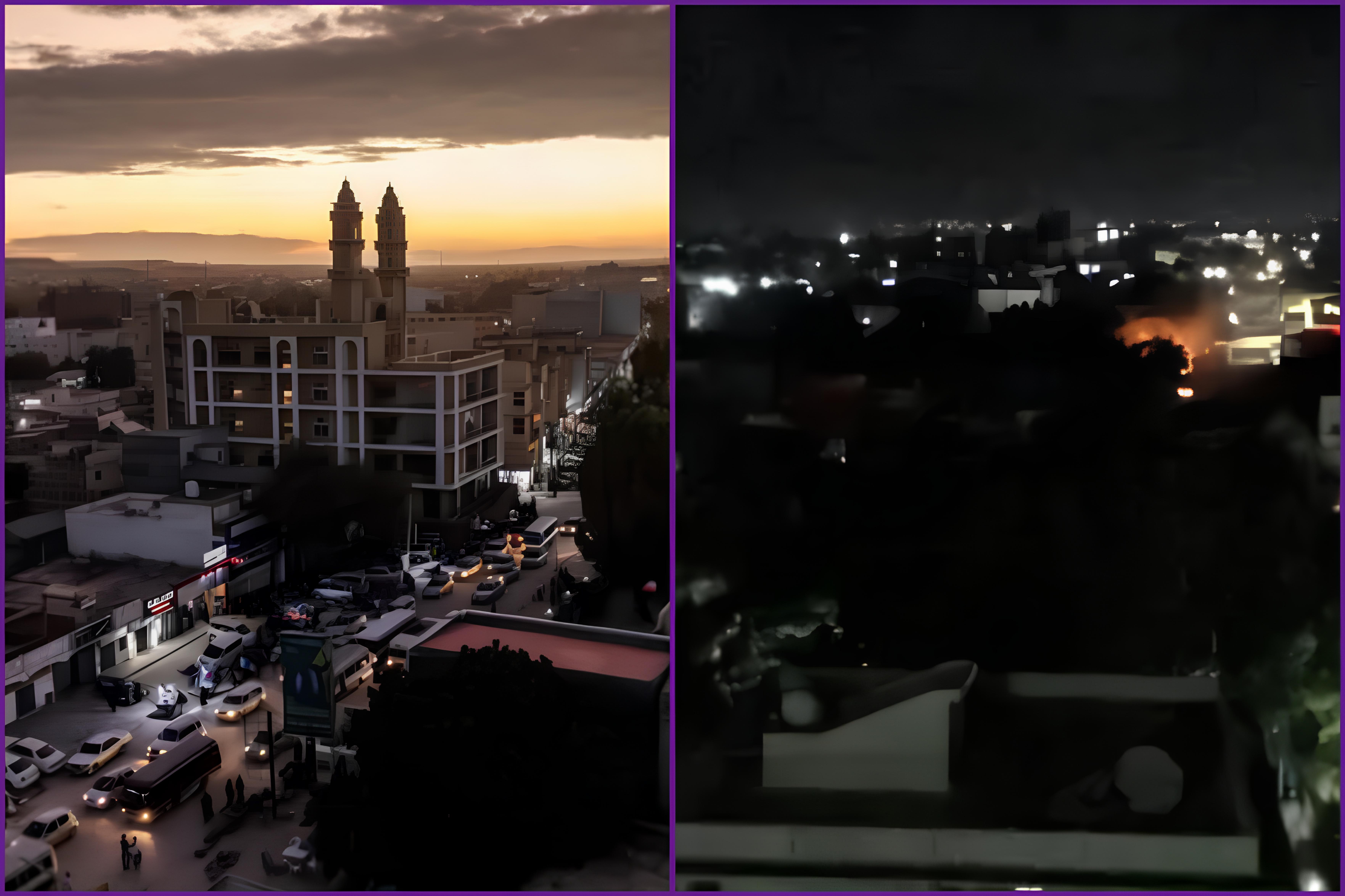
Hargeisa, Somaliland (left) appears modern, well-lit, and secure, while Mogadishu, Somalia (right) faces frequent power outages and limited security—highlighting a stark contrast between the two capitals. © BBN
For over 34 years, the Republic of Somaliland has proudly stood as a democratic nation in the Horn of Africa. Yet, a question lingers: what does it say about leadership when a country fails to adequately manage or secure its own capital city?
Being the ruler of a nation is not simply a title—it is a responsibility to ensure the safety, stability, and prosperity of every citizen. When a capital remains exposed to mismanagement, it reflects not on the people of the city, but on the failures of governance. It is not a question of character or patriotism of the residents; it is a question of policy, planning, and execution by those entrusted with power.
A thriving capital should be a symbol of progress and security, demonstrating that the government is capable of protecting its citizens while fostering economic and social development. When this is not the case, the consequences ripple across the nation: confidence erodes, opportunities are lost, and the international perception of governance suffers.
Somaliland’s experience shows that long-term stability is possible, but only if the government takes proactive measures to manage its cities effectively. Leadership is measured not by how long one sits in office, but by the tangible results delivered to the people.
In comparison, Somalia’s struggles with mismanagement and instability further highlight the critical importance of capable governance. The contrast between the two nations shows that being “in charge” is meaningless without accountability, vision, and action.
The success of a nation starts with the care and security of its capital—a lesson both Somalia and Somaliland must continue to reckon with.

