

© NDTV
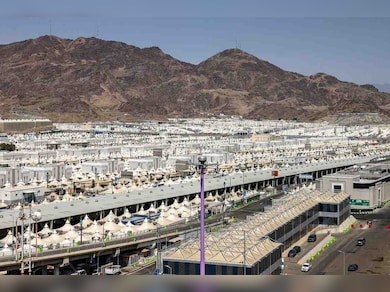
The site of the tragic accident near Medina where 42 Indian Umrah pilgrims lost their lives during their journey from Mecca, as Saudi Civil Defense teams worked to secure the area and begin investigations.
Tap the image or the background to close.
In the quiet predawn hours of a crisp November morning, a journey meant to be one of spiritual fulfillment turned into unimaginable horror for a group of Indian pilgrims bound for the holy city of Medina. As their bus rumbled along the highway from Mecca, carrying dreams of prayer and reflection after completing Umrah rituals, it collided head-on with a diesel tanker near the town of Mufrihat. The impact was catastrophic: the bus erupted in flames, trapping passengers inside a wall of fire that consumed everything in its path. By the time rescuers arrived, 42 lives—mostly from the bustling streets of Hyderabad and surrounding areas in Telangana—had been extinguished in an instant. This tragedy, unfolding just miles from one of Islam's most revered sites, has left families shattered and communities in mourning, prompting urgent questions about the safety of those who travel thousands of miles in pursuit of faith.
The accident occurred around 1:30 a.m. Indian Standard Time, equivalent to shortly after midnight local time in Saudi Arabia, when visibility was low and fatigue likely weighed heavy on the driver. Eyewitnesses, including local motorists who stopped to help, described a scene of pandemonium: the tanker, laden with flammable cargo, veered into the oncoming lane for reasons still under investigation, smashing into the side of the pilgrim bus. Fuel spilled across the asphalt, igniting almost immediately and turning the vehicle into a blazing inferno. Screams pierced the night as flames licked at the windows, and the acrid smoke billowed high into the desert sky. Rescue teams from nearby stations, aided by Saudi civil defense units, battled the blaze for over an hour, but the intensity of the fire made extraction nearly impossible for many. Among the 42 confirmed dead were 20 women and 11 children, ordinary folks who had scrimped and saved for this once-in-a-lifetime pilgrimage.
What made this group so poignant was their shared story of devotion and community. Organized through local travel agencies in Hyderabad, the pilgrims had departed India just days earlier, their hearts alight with anticipation for Umrah—the lesser pilgrimage that any Muslim can undertake year-round, unlike the mandatory Hajj. Many were first-timers, hailing from modest neighborhoods in the Old City of Hyderabad, where the call to prayer echoes five times a day from minarets piercing the skyline. Families back home had gathered in prayer circles, bidding farewell with garlands of marigolds and tearful hugs. The bus, chartered for comfort after the rigors of Mecca's crowded rituals, was meant to ferry them safely to Medina, home to the Prophet Muhammad's mosque. Instead, it became a tomb on wheels. Preliminary reports suggest the passengers were asleep when the crash happened, offering no chance to escape the rapidly spreading fire. Survivors, numbering a handful, recounted in hushed tones to Saudi media how they clawed their way out through shattered emergency exits, their clothes singed and lungs burning from smoke inhalation.
News of the disaster rippled across India like a shockwave, reaching Hyderabad by mid-morning and plunging the city into collective grief. Mosques overflowed with impromptu prayer sessions, and streets that buzzed with Diwali preparations the week prior now fell silent under the weight of sorrow. One family, the Alis from Tolichowki, learned of the loss through a frantic call from a relative in Riyadh. Fatima Ali, 45, a schoolteacher who had dreamed of touching the Kaaba since childhood, was among the deceased, traveling with her two young daughters, Aisha and Zara, aged 8 and 10. Her husband, back in Hyderabad running a small tailoring shop, collapsed upon hearing the confirmation, whispering, "She left with such joy, promising sweets for the girls from Medina. How do I tell our son?" Similar tales emerged from other households: a retired engineer who sold his land to fund the trip, a young couple on their honeymoon pilgrimage, and elderly grandparents fulfilling vows made decades ago. The Telangana Haj Committee, which had registered many of these pilgrims, released a tentative passenger manifest, though full identification awaits DNA testing due to the fire's devastation.
Indian leaders responded with a swift outpouring of condolences and action, bridging the gap between bureaucracy and heartbreak. External Affairs Minister S. Jaishankar, posting on social media from New Delhi, expressed profound shock: "Deeply shocked at the accident involving Indian nationals in Medinah, Saudi Arabia. Our Embassy in Riyadh and Consulate in Jeddah are giving the fullest support to Indian nationals and families affected by this accident. Sincere condolences to the bereaved families. Pray for the speedy recovery of those injured." In Hyderabad, Chief Minister A. Revanth Reddy, visibly moved during a press briefing, directed state officials to liaise immediately with the Ministry of External Affairs and Saudi counterparts. "This is a wound on our shared spirit of faith," he said, announcing a dedicated control room at the state secretariat with helplines (+91 79979 59754 and +91 99129 19545) for anguished relatives seeking updates. The Indian Consulate in Jeddah activated its own 24/7 crisis center, toll-free at 8002440003, fielding calls from dawn till dusk as parents and spouses pleaded for scraps of information. Hyderabad MP Asaduddin Owaisi, whose constituency includes many of the victims' neighborhoods, took to the streets, visiting affected homes and coordinating with travel operators to compile lists of the missing. "We must prioritize bringing our brothers and sisters home with dignity and ensure the injured receive world-class care," he urged, his voice cracking with emotion during a televised address.
On the Saudi side, the response was methodical but measured, reflecting the kingdom's vast experience in managing pilgrim influxes. Civil defense spokespersons confirmed the death toll at 42, with forensic teams working around the clock to identify remains charred beyond recognition. The General Directorate of Passports extended visa relaxations for family members flying in to claim bodies, while the Ministry of Hajj and Umrah issued a statement expressing solidarity: "Our hearts ache for the pilgrims whose sacred journey was cut short. Saudi Arabia stands with India in this time of trial." Local rescuers, commended for their bravery, included volunteers who risked burns to pull survivors free, one of whom—a young Medina resident—told reporters, "These were guests of God; we fought the fire as if it were our own kin." As the sun rose over the crash site, tow trucks hauled away the twisted wreckage, a stark reminder amid the golden sands. Saudi authorities have launched a probe into the tanker's braking systems and the bus's compliance with roadworthiness standards, promising transparency to prevent future calamities.
This incident lays bare the precarious underbelly of Umrah travel, a pilgrimage that draws over two million Indians annually to Saudi Arabia's holy sites. Unlike Hajj, which is tightly regulated with quotas and state-sponsored quotas, Umrah operates in a more fluid space, often through private operators offering affordable packages. Buses like the one involved crisscross the 450-kilometer Mecca-Medina corridor daily, ferrying devotees along highways that, while modernized, still claim lives due to high speeds, erratic driving, and the sheer volume of traffic. Data from the Saudi General Authority for Statistics reveals that road accidents involving pilgrims have risen 15% in the past year, attributed to post-pandemic travel booms. Experts point to fatigue among drivers on long hauls and inadequate fire suppression systems in vehicles as recurring culprits. "Pilgrims arrive exhausted from flights and rituals; they're vulnerable," notes Dr. Ahmed Al-Shehri, a Riyadh-based transport safety analyst. "We need mandatory rest stops and AI-monitored fleets."
In the broader tapestry of pilgrim safety, Saudi Arabia has made strides—introducing dedicated lanes for Hajj convoys and apps for real-time traffic alerts—but gaps persist for Umrah groups. The kingdom's Vision 2030 initiative includes smart city upgrades around holy sites, yet rural highways like the one near Mufrihat lag behind, with sparse emergency infrastructure. Indian officials have long advocated for bilateral pacts on pilgrim transport, including joint audits of buses and mandatory insurance. Following similar mishaps, such as a 2019 crash that killed 24 near Taif, New Delhi pushed for enhanced training for drivers handling Indian groups. Now, with this fresh wound, voices grow louder. BRS leader K.T. Rama Rao called for "immediate bilateral talks to enforce stricter safety protocols," while former Jammu and Kashmir Chief Minister Ghulam Nabi Azad lamented the "horrific loss" and urged comprehensive support packages for bereaved families, including financial aid and counseling.
As investigations unfold, the focus shifts to healing. In Hyderabad's Charminar shadow, community kitchens serve solace in the form of sheer khurma and qurbani meat, while imams lead nightly surahs for the departed. Families huddle over WhatsApp groups, sharing grainy photos of loved ones in ihram robes, their faces radiant with hope. One widow, speaking anonymously from her Malakpet home, clutched a prayer mat stained with tears: "They went seeking paradise; perhaps Allah granted it swiftly. But the emptiness here is hellish." Saudi hospitality shines through, too—hospitals in Medina treat the injured gratis, with Indian nurses flown in for cultural comfort. Repatriation flights, chartered by the external affairs ministry, are slated for later this week, allowing families a final farewell at Hajj terminals.
Yet amid the grief, flickers of resilience emerge. Survivors, bandaged but unbroken, vow to complete their Umrah in honor of the lost. "Their prayers will echo through us," one young man from Secunderabad told a visiting consul. This tragedy, while a stark interruption to the sacred rhythm of pilgrimage, underscores the unbreakable thread of faith binding communities across borders. It calls not just for condolences, but for concrete change: safer roads, vigilant oversight, and a recognition that every bus rolling toward Medina carries not mere passengers, but souls on a divine errand. As the desert winds scatter the ashes of this sorrow, may they carry prayers for prevention, ensuring the path to piety remains one of peace, not peril. In the words of the Quran, "With hardship comes ease"—a balm for the broken, a blueprint for the better.

