

© SLBA
Somaliland Banking Association
Somaliland Banking Association
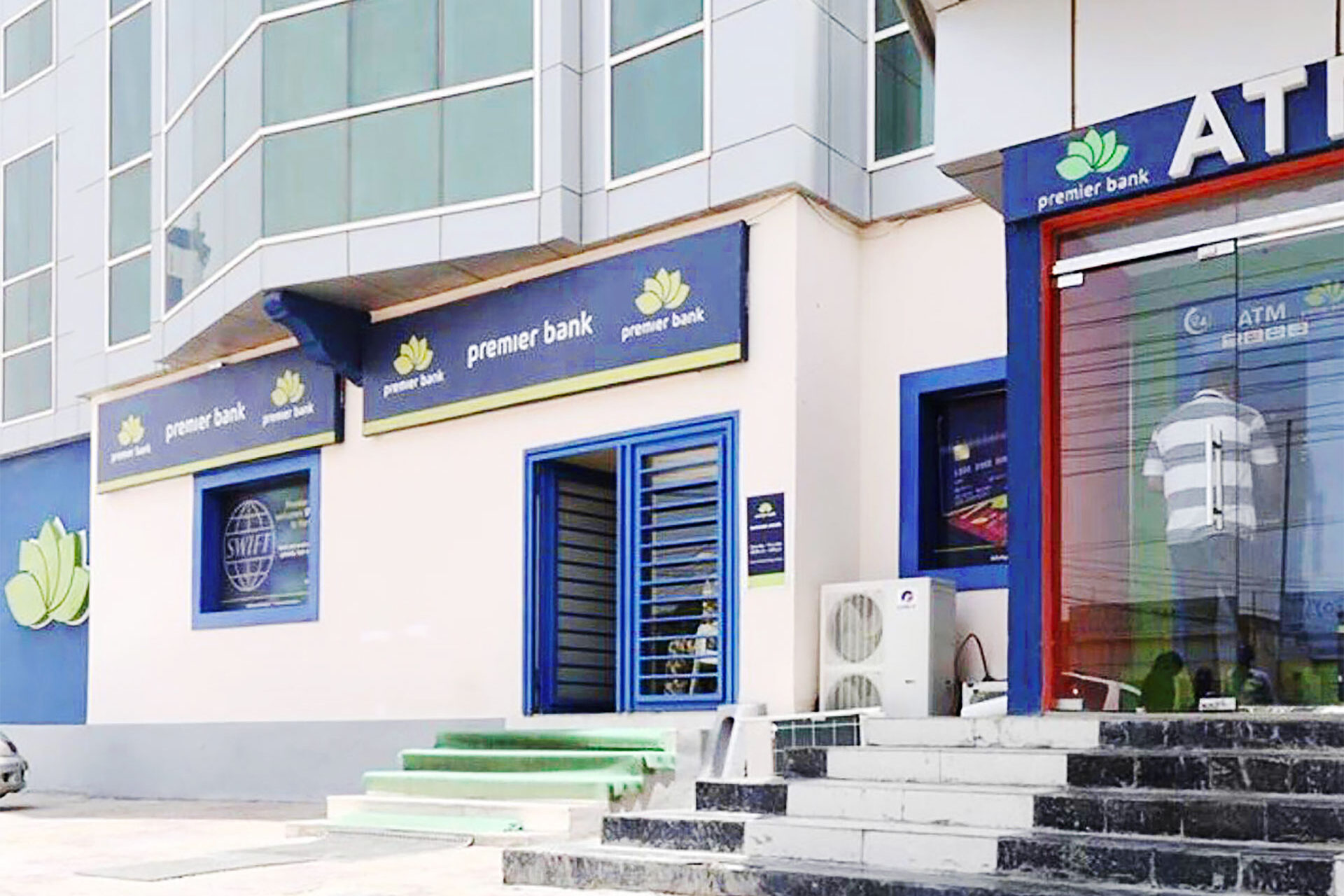
A branch of Premier Bank in Hargeisa, Somaliland. The bank, one of the region’s leading financial institutions, faces growing public scrutiny amid controversy over its role in Somalia’s e-visa payment system — a dispute that has reignited concerns about respecting Somaliland’s sovereignty and borders.
Tap the image or the background to close.
Subscribe to BBN Daily
Thank You!
We've received your request. Please check your email to confirm your subscription.
Recent controversy surrounding Premier Bank’s involvement in Somalia’s e-visa payment system has deepened public concern about the misuse of financial institutions for political purposes and the continued disregard for Somaliland’s sovereignty and borders. The allegations suggest that President Hassan Sheikh Mohamud’s administration is exploiting the e-visa system not only for centralized revenue collection but also as a political tool to undermine Somaliland’s independent governance.
Sources claim that Premier Bank, a commercial institution with operations across Somalia and Somaliland, has been tasked with handling international payments related to Somalia’s e-visa platform. Critics argue that this arrangement is not merely technical but political — designed to project Mogadishu’s authority over all Somali territories, including Somaliland, in violation of established borders and the self-governing status Somaliland has maintained since 1991.
According to individuals familiar with the matter, initial efforts were made to resolve the issue discreetly, to prevent public escalation and protect the bank’s reputation. However, those attempts failed after indications emerged that Premier Bank’s decision-making was under political influence. Observers now describe the bank as “captured” by state interests, functioning under the weight of political pressure rather than independent financial principles.
This situation has alarmed Somalilanders, who view the e-visa system as another step in a long-running attempt by Somalia’s federal government to erode Somaliland’s sovereignty through administrative and financial instruments. Analysts point out that linking e-visa payments for Somaliland’s travelers to a bank that operates under Mogadishu’s jurisdiction effectively disregards Somaliland’s right to manage its own immigration, finances, and foreign relations.
Premier Bank, headquartered in Mogadishu but operating branches in Hargeisa and other cities, now finds itself at the center of a growing political storm. The issue is no longer about banking efficiency — it has become a matter of national dignity and sovereignty. Somaliland citizens and investors are increasingly calling for the bank’s management and shareholders to distance themselves from any role that could be interpreted as supporting Mogadishu’s attempts to assert control beyond its borders.
The controversy also exposes a dangerous pattern in the federal government’s conduct. President Hassan Sheikh Mohamud has been accused of politicizing nearly every national process — from airspace management to aid distribution — turning what should be neutral state functions into instruments of political warfare. The e-visa issue, critics say, is merely the latest example of that broader campaign to delegitimize Somaliland’s institutions and reimpose federal dominance under the guise of “national unity.”
If Premier Bank continues to serve as the payment processor for Somalia’s e-visa system, while simultaneously operating inside Somaliland, it risks losing the trust of its customers in Hargeisa and other regions that uphold Somaliland’s independence. Banking and politics cannot coexist without damaging both. Financial institutions are meant to be neutral service providers, not tools of geopolitical assertion.
The risks for Premier Bank are immense. The perception that it is complicit in a politically motivated system could lead to customer withdrawals, reputational damage, and isolation from Somaliland’s regulatory and financial ecosystem. Furthermore, such actions could provoke regulatory measures from Somaliland’s authorities to protect national sovereignty and economic independence.
Somaliland’s government has consistently maintained that it has no political or administrative connection with Mogadishu and rejects any policy or program — financial, digital, or otherwise — that presumes federal authority over its territory. Any attempt by Somali federal institutions to operate within Somaliland’s borders without coordination with Hargeisa is viewed as a breach of sovereignty.
For Somaliland citizens and businesses, vigilance is essential. Customers of Premier Bank are advised to closely monitor how the bank manages its operations within Somaliland and to demand clear assurances that their accounts and payments are not being tied to Somalia’s federal systems. Investors and depositors deserve transparency regarding how cross-border financial flows are handled, especially when those flows are politically sensitive.
The BBN Editorial Board reaffirms its commitment to defending Somaliland’s sovereignty, its territorial integrity, and its right to manage its financial and administrative affairs independently. The attempt to politicize commercial institutions like Premier Bank under the cover of modernization is unacceptable and must be challenged through civic awareness, regulatory oversight, and unified public pressure.
As Somaliland continues to build its democratic and economic structures, it must remain alert to efforts — subtle or overt — that aim to undermine its independence. Institutions that operate within its borders must respect the legal and political boundaries that separate Somaliland from Somalia. Sovereignty is not negotiable, and no digital system or banking contract should be allowed to blur that reality.
Premier Bank now faces a defining choice: either to remain a neutral financial service provider that respects Somaliland’s sovereignty or to risk being remembered as a commercial actor that placed political loyalty above professional integrity. The people of Somaliland, and the region at large, will be watching closely.

