Why Somaliland Is the Biggest Fear of Egypt and Djibouti: The Rising Power That Could Redraw East Africa’s Map
By -BBN - Investigation Desk 🔎
10/11/2025 09:47:00 am
0
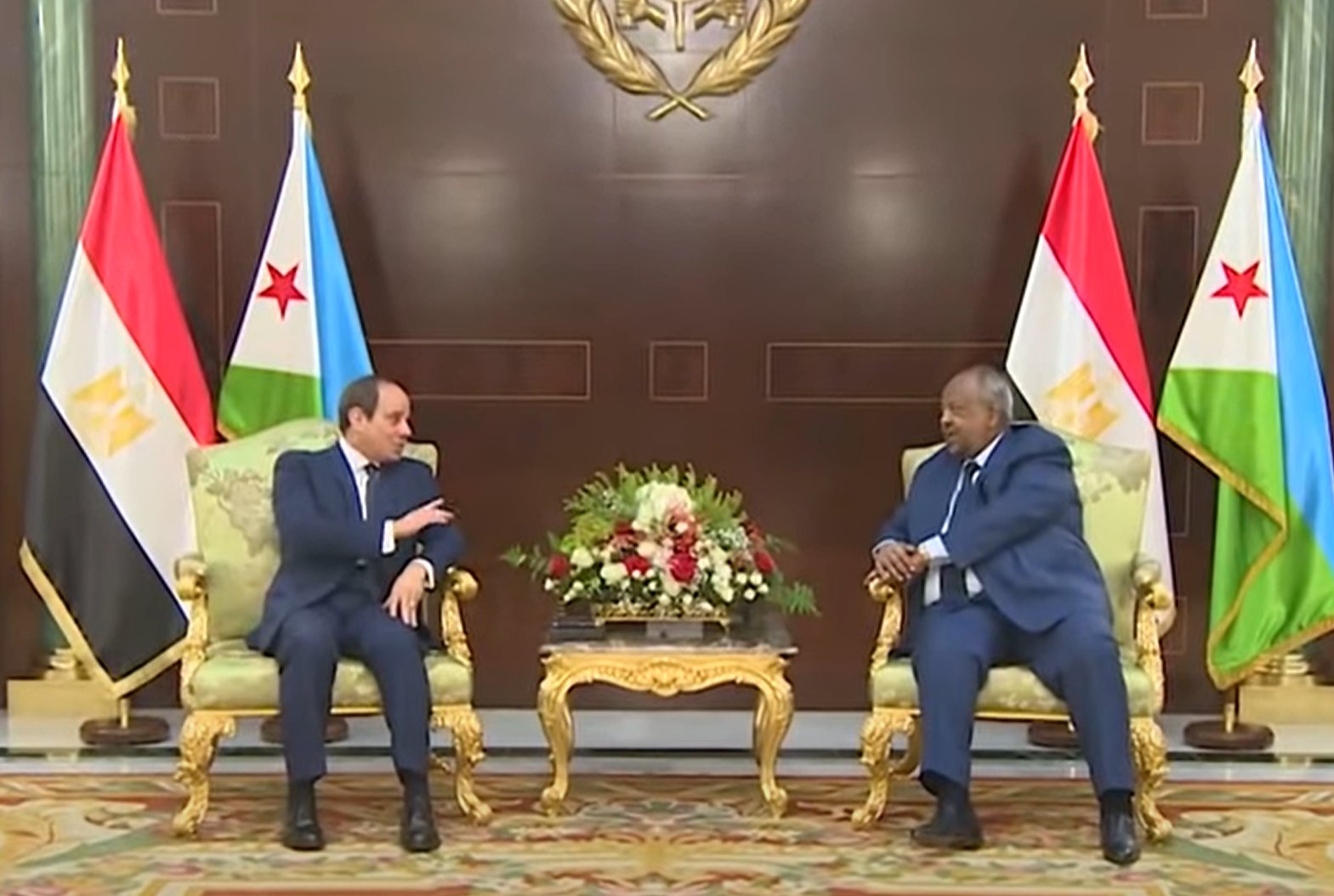
Egypt's unelected president Abdel Fattah el-Sisi and Djibouti's long-term ruler Ismaïl Omar Guelleh — two leaders whose entrenched power structures mirror their deep fears of Somaliland's rise and Ethiopia's growing influence in the Red Sea corridor.
×
Abdirahman Abdilahi Ali
CEO, BBN (Buraopost Newsletter)
Founder and publisher; leads editorial strategy and investigative oversight.
Sakariye Abdilahi Jama
Head, BBN Investigation Desk
Lead investigator and conflict analyst with deep field experience.
MH
Mona Hassan Jama
Senior Researcher — Burao
Field reporter focused on rural governance and human stories.
XI
Xayatt Abdi Ismail
Investigative Journalist — Hargeisa
Political analyst and investigative specialist on federal dynamics.
The Horn of Africa has long been one of the most strategically contested regions on the planet. It is a crossroads of global trade, a corridor for major shipping lanes connecting the Red Sea to the Gulf of Aden, and a hotbed of regional ambitions that span decades. Yet amid this turbulent landscape, one actor has quietly risen in influence and stability: Somaliland. Since declaring independence from Somalia in 1991, Somaliland has managed to create a functioning state out of the chaos surrounding it. It has developed stable democratic institutions, maintained security in a region riddled with conflict, and cultivated economic potential that could rival some of East Africa’s largest economies. This rise has not gone unnoticed. In fact, it has triggered profound fear and strategic concern among neighboring Djibouti and regional heavyweight Egypt.
Somaliland’s journey toward statehood is rooted in history. In 1960, the British Somaliland Protectorate gained independence, only to merge almost immediately with the Italian-administered south to form the Somali Republic. What was intended as a unifying gesture soon became a source of grievance. The northern territories that would become Somaliland felt politically marginalized and economically neglected. Decades of this marginalization culminated in the brutal civil war of the 1980s, during which government forces targeted northern clans, causing mass displacement and destruction. When the central government collapsed in 1991, Somaliland seized the moment to declare independence, citing both historical injustice and the need for self-governance. Since then, it has functioned as a de facto state with its own currency, security forces, and governance system – yet it remains unrecognized by the United Nations or any major world power.
This lack of recognition has allowed Djibouti and Egypt to maneuver diplomatically and strategically to counter Somaliland’s rise. Djibouti, perched at the Bab-el-Mandeb Strait, is one of the most strategically valuable nations in the world. Its ports serve as the lifeline for landlocked Ethiopia and a hub for global shipping, attracting military and economic interests from powers as far-reaching as the United States, France, and China. A recognized Somaliland, with a functioning port at Berbera, threatens to divert trade and investments away from Djibouti, undermining its economic model. For Djibouti, Somaliland is not just a neighbor asserting its independence; it is a potential competitor capable of eroding its strategic relevance and economic dominance in the region.
Egypt’s fears are even more complex. The Red Sea and the Suez Canal are Egypt’s economic lifeline, and any shift in control over these maritime routes threatens its national interests. Ethiopia, long landlocked and economically ambitious, has sought maritime access for decades. In 2024, Ethiopia and Somaliland signed a Memorandum of Understanding granting Addis Ababa access to the port of Berbera, potentially allowing the creation of a naval presence. Cairo views this development as an existential threat. A strong Somaliland allied with Ethiopia could tip the balance of power in the Red Sea, weakening Egypt’s historical influence and elevating Ethiopia as a regional superpower.
Economically, Somaliland’s potential is staggering. Its strategic location along the Red Sea provides a direct alternative to Djibouti for maritime trade, offering shorter shipping routes for goods from the Middle East, Asia, and Africa. The Berbera corridor has already attracted international investment interests, and recognition could unlock further foreign direct investment in infrastructure, energy, agriculture, and logistics. If allowed to flourish, Somaliland could become one of the strongest economies in East Africa, a development that would challenge the status quo and create new regional alliances.
Beyond economics, Somaliland’s rise represents a shift in regional security dynamics. Its stability contrasts sharply with the insecurity of southern Somalia, and it has positioned itself as a potential mediator and partner in regional peace efforts. Djibouti and Egypt see a recognized Somaliland as a disruptor – a state that could tip power balances, facilitate Ethiopia’s maritime ambitions, and undermine their strategic interests. For Egypt, the fear is not only about trade routes but about military influence. Ethiopia’s potential access to a Red Sea port could allow it to project naval power, challenging Egypt’s supremacy in the region. Djibouti, on the other hand, faces the immediate economic risk of losing its dominant position as the primary regional port hub.
Diplomatically, both Djibouti and Egypt have engaged in coordinated efforts to maintain Somaliland’s status quo. Djibouti leverages its international alliances to block recognition, positioning itself as a regional gatekeeper and mediator. Egypt has reinforced its support for Somalia’s territorial integrity, providing military and diplomatic backing to counter Ethiopia’s engagement with Somaliland. Globally, the picture is divided. Some countries advocate for self-determination and recognize Somaliland’s de facto stability, while others prioritize regional cohesion and fear the domino effect of supporting secessionist movements. The delicate international stance underscores the high stakes; recognition of Somaliland is not simply a bilateral matter but a potential catalyst for wider geopolitical shifts in the Horn of Africa.
Should Somaliland remain unrecognized, it faces limitations in economic growth, international partnerships, and security cooperation. Incremental recognition, however, could fundamentally alter regional dynamics. Ethiopia’s maritime access, combined with a recognized and economically empowered Somaliland, would compel Egypt and Djibouti to recalibrate alliances, military deployments, and trade relationships. Somaliland’s potential integration into regional economic structures, such as the Intergovernmental Authority on Development (IGAD), could further solidify its position as a stable, cooperative, and economically significant partner in East Africa.
The fear Somaliland evokes in Djibouti and Egypt is rooted in tangible threats to power, influence, and economic dominance. Djibouti risks losing its maritime preeminence, while Egypt faces the specter of Ethiopia’s emergence as a Red Sea power with direct naval capability. Both nations perceive Somaliland’s recognition as destabilizing, capable of reshaping alliances and threatening long-standing strategic advantages. For Somaliland, diplomatic engagement and the demonstration of responsible governance are key to countering these fears. For Djibouti and Egypt, recognizing Somaliland’s de facto reality while negotiating economic and security interests may be the pragmatic path forward. For the international community, the challenge lies in balancing the principles of self-determination with regional stability, ensuring that the Horn of Africa’s evolving political landscape does not descend into renewed conflict.
The recognition of Somaliland is not a mere political formality. It represents a seismic potential shift in East African geopolitics, trade, and security. Somaliland’s rise, while a beacon of stability and economic promise, is a direct challenge to entrenched regional powers, forcing Egypt and Djibouti to confront the realities of a new, stronger player on the Horn of Africa’s strategic map. How the world responds will determine not only Somaliland’s future but also the trajectory of the Horn of Africa, the balance of power in the Red Sea, and the region’s prospects for stability and prosperity. The fear that Somaliland inspires is real, tangible, and deeply rooted in the geopolitical, economic, and strategic stakes that define one of the most critical regions on the planet.
BBN Investigation Desk Note (Isolated)
BBN Investigation Desk
Verified
Buraopost Newsletter — investigative and analytical unit based in Burao, Somaliland
Editor’s Note:
BBN is the short name for Buraopost Newsletter. The investigative team that produced this report is formally titled the BBN Investigation Desk. All research, reporting and editorial review for this investigation were conducted in Somaliland by the BBN Investigation Desk under the editorial standards of Buraopost.
Guided by our editorial policy—truth, accountability, and the defense of Somaliland’s sovereignty—Buraopost operates independently of political parties, foreign governments, or partisan interests. Each BBN investigation follows strict verification and editorial-review processes to ensure accuracy, impartiality, and public value.
Abdirahman Abdilahi Ali
Author
CEO, Buraopost / BBN
Founder and publisher; leads editorial strategy and investigative oversight.
Sakariye Abdilahi Jama
Author
Head, BBN Investigation Desk
Lead investigator and conflict analyst with deep field experience.
MH
Mona Hassan Jama
Author
Senior Researcher — Burao
Field reporter focused on rural governance and human-interest investigations.
XI
Xayatt Abdi Ismail
Author
Investigative Journalist — Hargeisa
Political analyst and specialist on federal dynamics and civil-military relations.