

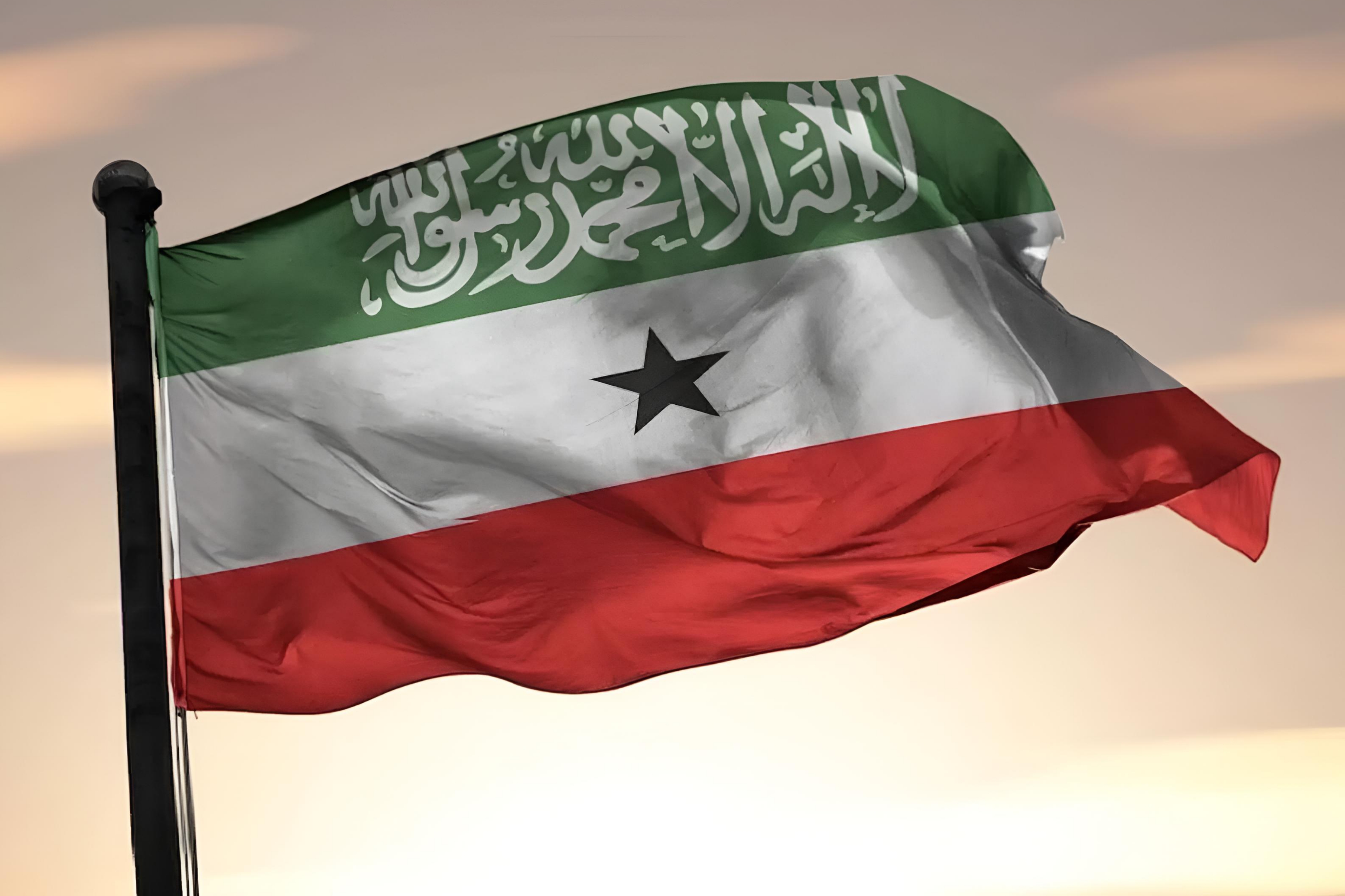
Somaliland's national flag flutters above the bustling streets of Hargeisa, symbolizing the nation's enduring quest for international recognition amid a backdrop of vibrant markets and resilient communities.
×
![Enlarged view of Somaliland flag in Hargeisa]()
Subscribe to BBN Daily
Join our newsletter for the latest news and updates, delivered straight to your inbox.
Thank You!
We've received your request. Please check your email to confirm your subscription.
Somaliland's story is one of resilience forged in the fires of history. Once a British protectorate known as British Somaliland, the territory gained independence on June 26, 1960, and was recognized by over 35 countries, including the United States, for a brief five days before voluntarily uniting with the Italian-administered Trust Territory of Somaliland to form the Somali Republic on July 1. That union, intended to create a Greater Somalia, quickly soured. By the 1980s, under the brutal dictatorship of Siad Barre, northern Somalis—predominantly from the Isaaq clan—faced systematic oppression, culminating in a genocide that killed tens of thousands and razed cities like Hargeisa to the ground. Barre's forces bombed the capital in 1988, leaving behind a landscape of rubble and mass graves that still haunt the collective memory. Survivors like Ahmed Yusuf, a 65-year-old tea vendor in Hargeisa's central market, recall the horrors vividly. "We rebuilt this city brick by brick with our own hands," Yusuf says, gesturing to the vibrant shops around him. "No foreign aid, no recognition—just our determination to never go back to that union."
In May 1991, as Somalia descended into civil war following Barre's ouster, clan elders and leaders in the north declared the restoration of Somaliland's independence, reclaiming its 1960 borders. Since then, the republic has built a hybrid democratic system blending traditional clan governance with modern institutions. It has held multiple peaceful elections, including the landmark 2024 presidential vote where Abdirahman Mohamed Abdullahi, known as "Irro," of the opposition Waddani party, defeated incumbent Muse Bihi Abdi. This transfer of power was hailed internationally as a model for the region, contrasting sharply with Somalia's ongoing instability, where al-Shabaab militants control swathes of territory and federal elections are often marred by violence and corruption. In Hargeisa, the capital with a population of about 1.2 million, daily life reflects this hard-won peace: children in crisp uniforms head to schools, entrepreneurs hawk mobile phones and livestock at the sprawling Naasa Hablood market, and women in flowing hijabs run thriving businesses from roadside kiosks. Yet, the lack of recognition casts a long shadow, limiting access to international loans, formal banking, and global trade networks.
Economically, Somaliland punches above its weight despite these constraints. With a GDP estimated at around $3.8 billion in 2025—up from $2.5 billion in 2020—the economy relies heavily on livestock exports, which account for about 60% of revenue. Camels, goats, and sheep from the arid plains of the Sanaag and Sool regions are shipped to markets in the Middle East, generating over $500 million annually. Remittances from the Somaliland diaspora, numbering around 1 million and concentrated in the U.S., UK, and Scandinavia, inject another $1.2 billion each year, fueling construction booms in Hargeisa where modern high-rises now dot the skyline alongside traditional adobe homes. The Port of Berbera, strategically located on the Gulf of Aden, has become a linchpin of growth following a $442 million investment by Dubai's DP World in 2016. Expanded to handle 500,000 containers annually, it serves as a vital gateway for landlocked Ethiopia, which imports 30% of its goods through Berbera. Recent developments, including the 2024 memorandum of understanding (MoU) with Ethiopia granting Addis Ababa a 20-kilometer coastal lease for a naval base in exchange for potential recognition and stakes in Ethiopian Airlines, have supercharged optimism. "This deal isn't just about land—it's about survival," explains Fatima Ali, a 42-year-old economist at the University of Hargeisa. "Ethiopia's recognition could open floodgates, but it also risks enflaming tensions with Mogadishu, who see it as a violation of Somali sovereignty."
The Ethiopia-Somaliland pact, signed in Addis Ababa on January 1, 2024, has indeed ratcheted up regional drama. Somalia's federal government in Mogadishu denounced it as illegal, expelling Ethiopia's ambassador and threatening military action, though its forces are stretched thin battling al-Shabaab. In Hargeisa, the agreement is viewed as a pragmatic step toward de facto statehood. Local truck drivers like Hassan Mohamed, who ferry goods between Berbera and the Ethiopian border, report increased business. "More trucks mean more jobs," Mohamed says, unloading crates of khat at a roadside depot. "But without full recognition, we're still handcuffed—no World Bank loans, no IMF support." The deal's implications extend to energy prospects: Somaliland's untapped oil and gas reserves, estimated at 30 billion barrels in the Togdheer Basin, have attracted interest from companies like Genel Energy, which plans exploratory drilling in 2025. If successful, this could transform the economy, potentially boosting GDP by 20% annually, according to a 2025 report from the Somaliland Ministry of Energy.
Yet, for many in Hargeisa, the push for recognition is as much about dignity as dollars. At the bustling Independence Monument—a towering obelisk commemorating the 1991 declaration—young activists gather weekly to chant slogans and wave the green, white, and red flag. "We've proven we can govern ourselves," says Amina Farah, a 28-year-old journalist with the local Horn Tribune. "Why should we beg for what's rightfully ours?" Farah's sentiment echoes a broader frustration: despite hosting U.S. drone bases for counterterrorism operations against al-Shabaab and pirates in the Gulf of Aden, Somaliland receives scant direct aid. Instead, funds flow through Mogadishu, often siphoned off by corruption. A 2025 Council on Foreign Relations report notes that this "One Somalia" policy has failed, perpetuating instability while ignoring Somaliland's successes. The report argues that recognition could stabilize the Horn, countering Chinese influence—Beijing has pressured Somaliland over its ties to Taiwan, which opened a representative office in Hargeisa in 2020.
This geopolitical chess game has drawn U.S. attention. In Washington, Republican lawmakers are leading the charge. Rep. Brian Mast introduced H.R. 5300, the Department of State Policy Provisions Act, on September 11, 2025, which includes Section 305 mandating separate travel advisories for Somaliland and Somalia, and exploring a U.S. representative office in Hargeisa. "This isn't about redrawing maps—it's about rewarding democracy," Mast stated during a House Foreign Affairs Committee hearing. The bill builds on earlier efforts, like Rep. Scott Perry's Republic of Somaliland Independence Act (H.R. 3992), introduced in June 2025, which explicitly calls for recognition. Sen. Ted Cruz amplified the call in an August 14, 2025, letter to President Trump, emphasizing Somaliland's role in countering China and terrorism. "Somaliland has emerged as a critical security partner," Cruz wrote, citing its cooperation with U.S. forces and commitment to Israel via the Abraham Accords.
In Hargeisa, these developments are met with cautious hope. At a local café overlooking the city's rolling hills, university students debate over cups of shaah (tea). "Trump's team sees us as a bulwark against the Houthis and Iran," says Khalid Osman, a 22-year-old political science major. "But we've heard promises before." Indeed, the Heritage Foundation's Project 2025 blueprint, influential in the Trump administration, explicitly recommends recognition to secure a U.S. foothold in the Red Sea. Somaliland's military, trained by the UK and Turkey, already patrols key shipping lanes, thwarting piracy that once plagued the region.
Challenges persist, however. Clan tensions simmer in eastern regions like Sool and Sanaag, where pro-Somalia sentiments occasionally flare into clashes. The economy, while growing at 3.5% in 2025, grapples with youth unemployment at 65% and climate shocks—droughts have decimated herds, forcing nomads like those in the Ogo Mountains to migrate to Hargeisa's outskirts. Women's rights advocates, such as Nimo Hassan of the Nagaad Network, push for greater inclusion: "Recognition would bring investment in education and health, empowering our girls." Health indicators are improving, with life expectancy rising to 58 years, but without international status, vaccines and aid arrive piecemeal.
Regionally, the Ethiopia deal has isolated Somalia, prompting Mogadishu to ally with Egypt and Turkey against perceived threats. In Hargeisa, President Irro has prioritized diplomacy, meeting U.S. officials in August 2025 to pitch Somaliland as a stable ally. "We're not secessionists—we're restorers of our original state," Irro told a crowd at the Hargeisa Cultural Center. Local media, like the independent Horn Diplomat, amplifies these voices, with editorials urging unity amid external pressures.
As the sun sets over Hargeisa's minarets, casting golden hues on the bustling streets, the dream of recognition feels tantalizingly close. For residents like Yusuf the tea vendor, it's about legacy: "My grandchildren deserve a country on the map." With U.S. midterm elections looming and Trump's Africa strategy unfolding, Somaliland's fate could hinge on whether Washington prioritizes pragmatism over outdated policies. In this corner of the Horn, where camels roam dusty roads and entrepreneurs build apps for mobile money, the wait continues—but so does the unyielding spirit.

