

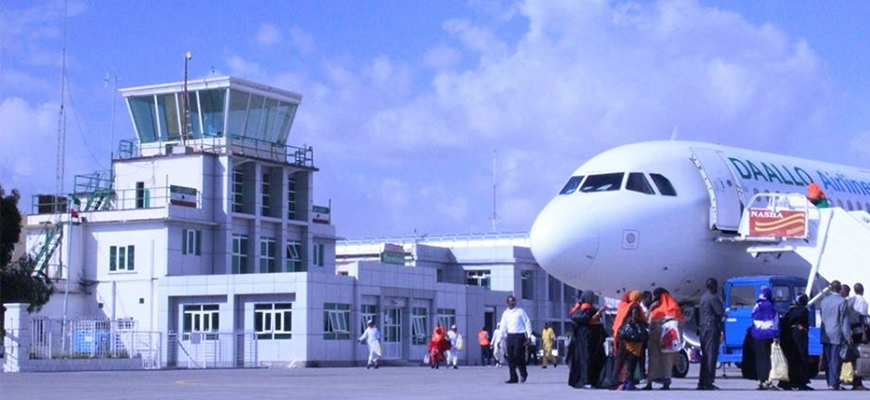
Immigration officers at Hargeisa Egal International Airport brief passengers on Somaliland's updated Visa-on-Arrival requirements.
×
![Enlarged view of immigration officers at Hargeisa airport]()
Subscribe to BBN Daily
Join our newsletter for the latest news and updates, delivered straight to your inbox.
Thank You!
We've received your request. Please check your email to confirm your subscription.
According to the directive, any traveler who hopes to enter Somaliland under the Visa-on-Arrival program will be required to satisfy a series of conditions. Passports must remain valid for at least six months beyond the intended stay, a rule intended to avoid complications with overstays and to ensure that visitors can return to their home countries or continue onward without administrative hurdles. A confirmed return or onward ticket is mandatory, demonstrating that visitors do not intend to remain in Somaliland beyond the duration of their permitted visit. Travelers must also provide proof of sufficient financial means to cover their stay, a standard requirement in many countries designed to reduce the risk of visitors falling into hardship or seeking unauthorized employment. Additionally, each visitor must present a verifiable local contact or sponsor, offering authorities a point of reference within the country. Visa fees are payable at the airport for those entering by air and not traveling merely in transit. Importantly, the government clarified that members of the Somaliland diaspora and other Somali nationals holding foreign passports will remain exempt from these new obligations.
One of the most striking aspects of the updated policy is its emphasis on limiting Visa-on-Arrival privileges to specific entry points. While travelers arriving at designated airports—particularly Hargeisa Egal International Airport—can still qualify if they meet all the stated conditions, those attempting to enter by land or through seaports not listed in the directive will no longer be eligible. Instead, they must apply for a visa in advance through a Somaliland embassy, consular office, or the official online application system. Officials have underscored that travelers who ignore this requirement will be turned back at the border or refused entry at the port, a measure they describe as critical for maintaining orderly migration and ensuring that immigration officers can adequately vet incoming visitors.
The timing of these changes reflects both local and global dynamics. In the Horn of Africa, shifting security concerns, the movement of people displaced by regional conflicts, and the growth of cross-border trade have increased pressure on governments to monitor their frontiers with greater precision. For Somaliland, which has maintained a remarkable level of internal stability since declaring independence from Somalia in 1991, the need to safeguard its borders has taken on new urgency as the region experiences political turbulence and economic migration. Officials view these visa reforms as a natural evolution of the country’s long-term strategy: protect national security while promoting economic development through tourism, investment, and international engagement.
Although not formally recognized as a sovereign state by the wider international community, Somaliland has spent more than three decades cultivating an image of reliability and order. It boasts its own elected government, its own currency, and a functioning legal system. By tightening Visa-on-Arrival rules, the government signals to potential investors and foreign partners that it is serious about meeting global standards. “Ensuring that visitors enter through secure and regulated channels is critical to maintaining both national security and the positive experience we aim to provide to international travelers,” said a senior official from the Ministry of Civil Aviation and Airports when announcing the changes. The official stressed that the policy is not intended to discourage tourism or business visits but to ensure that every arrival is properly documented and that visitors have the resources and intentions that align with Somaliland’s regulations.
The practical implications for travelers are significant. Anyone planning to enter Somaliland via land routes—from Ethiopia, Djibouti, or other neighboring territories—or via maritime ports must now plan ahead, submitting a visa application before beginning their journey. The government strongly encourages the use of its official e-visa portal, which offers an online application process designed to be efficient and transparent. For air travelers who prefer to obtain a visa on arrival, meticulous preparation is essential: passports must be in order, return tickets confirmed, financial documentation ready, and contact information verified. Authorities have stated that immigration officers will have the discretion to deny entry to anyone who cannot produce these materials, even if the traveler had previously assumed that a simple arrival at the airport would suffice.
This shift is not only about documentation; it reflects Somaliland’s broader ambition to modernize its immigration infrastructure and align it with best practices seen in internationally recognized states. The country hopes that these measures will encourage responsible tourism and business travel, deter irregular migration, and reassure international partners that Somaliland’s borders are secure. Enhanced border management can also help the government collect more accurate data on visitor numbers and trends, enabling better planning for services such as airport facilities, transportation, and hospitality. It is part of a larger effort to present Somaliland as a reliable partner in regional security and a serious player in international commerce.
Economic considerations are also at the heart of the decision. Tourism and foreign investment are vital for Somaliland’s development. By guaranteeing that visitors arrive through formal channels, the government can better manage revenue from visa fees, ensure compliance with taxation, and create a safer environment that appeals to business leaders and investors. A secure and well-regulated immigration system, officials believe, is a prerequisite for sustained economic growth. International visitors—whether entrepreneurs exploring opportunities in the port city of Berbera, aid workers collaborating on humanitarian projects, or travelers drawn to the ancient rock art of Laas Geel—can have confidence that their safety and legal status will be protected when immigration protocols are clear and consistently enforced.
The announcement has drawn attention from regional observers who see Somaliland’s move as part of a wider trend across Africa and the Middle East, where governments are reevaluating their visa policies to strike a balance between openness and security. In neighboring Ethiopia and Djibouti, immigration authorities have recently updated entry requirements in response to security concerns and the need to regulate labor migration. By acting now, Somaliland positions itself as proactive rather than reactive, signaling to both its citizens and the international community that it intends to control its borders on its own terms.
For the Somaliland diaspora and Somali nationals holding foreign passports, the exemption from the new rules is a nod to the enduring ties between the homeland and its global community. These individuals often travel frequently for family visits, business ventures, and investment projects, and the government has sought to maintain a welcoming stance toward them. Officials note, however, that even exempt travelers are expected to present valid documents and comply with standard immigration checks upon arrival.
As the policy takes effect, travelers are urged to review their plans carefully. Airlines operating flights into Hargeisa and other airports have been advised to verify passenger documentation before boarding, reducing the likelihood of passengers being denied entry upon arrival. Travel agencies and tour operators are also updating their guidance to clients, ensuring that visitors understand the importance of advance planning and the potential consequences of arriving without the proper paperwork. Embassies and consular offices are expected to experience an uptick in visa applications in the coming months, and the online portal is being promoted as a convenient alternative for those seeking to avoid in-person appointments.
While some travelers may view these changes as an added layer of bureaucracy, the Somaliland government insists that the benefits outweigh the inconvenience. By filtering entries through a more structured process, the country can focus resources on welcoming genuine tourists, investors, and partners. This clarity also serves international interests: countries cooperating with Somaliland on trade, security, and development can have greater confidence that the movement of people into and out of the territory is well monitored.
Ultimately, Somaliland’s decision to tighten Visa-on-Arrival rules reflects a maturing governance framework and a desire to engage with the world on equal terms. Even without formal recognition as a sovereign state, Somaliland continues to assert control over its affairs and to implement policies that echo those of fully recognized nations. For international travelers, the message is clear: Somaliland remains open for business and exploration, but entry will now be firmly guided by international best practices and a commitment to safety, order, and responsible growth. Those planning to visit—from adventurous tourists seeking the unspoiled beaches of the Gulf of Aden to business leaders exploring investment opportunities in the booming port of Berbera—are encouraged to prepare thoroughly, apply for visas when required, and approach their journey with the same professionalism and respect that Somaliland brings to managing its borders.

