

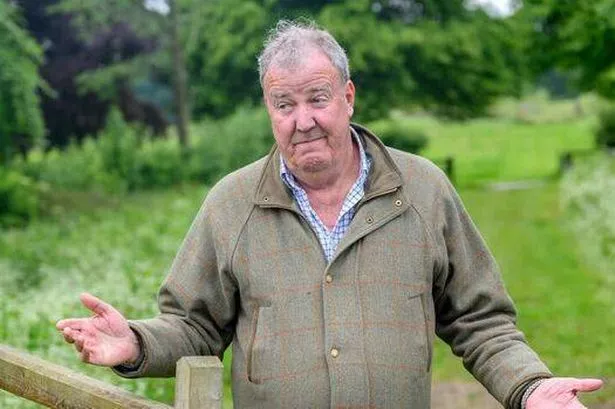
Jeremy Clarkson at his Cotswolds farm, where his viral tweet criticizing Angela Rayner's taxpayer-funded career has ignited a national debate on political entitlements. © Prime Video
Subscribe to BBN Daily
Join our newsletter for the latest news and updates, delivered straight to your inbox.
Thank You!
We've received your request. Please check your email to confirm your subscription.
London, September 5, 2025 – Television star and outspoken commentator Jeremy Clarkson has sparked a firestorm on social media with a pointed tweet criticizing Angela Rayner, the former Deputy Prime Minister, for what he sees as a lifetime of taxpayer-funded support. The post, which has racked up tens of thousands of likes and shares in just hours, taps into a deep well of public frustration over politicians who appear disconnected from the financial struggles of ordinary people.
Clarkson's message was blunt and unsparing: he highlighted how British taxpayers have footed the bill for Rayner's education, her early career wages at a local council, her salary as a Member of Parliament, and even a legal settlement that helped her purchase a home. "Tax payers have funded every aspect of her entire life," he wrote, summing up a sentiment that resonates with many who feel burdened by rising costs while public figures face scrutiny for their own financial dealings.
The timing couldn't be more charged. Rayner's resignation earlier this week came amid a major scandal involving her underpayment of £40,000 in stamp duty on an £800,000 flat in Hove, a seaside town in East Sussex. The Labour heavyweight admitted the error but insisted it was an honest mistake, stemming from not seeking specialist tax advice during the purchase. However, an ethics probe found she had breached the ministerial code, leading to her stepping down from her roles as Deputy Prime Minister and Housing Secretary. In her resignation letter to Prime Minister Keir Starmer, Rayner expressed deep regret, saying the distraction was harming the government's work on key issues like housing reform. The fallout has thrown the Labour government into turmoil, with opposition leaders calling for greater transparency and accountability in Westminster.
This episode isn't isolated—it's part of a broader wave of discontent with the political class. Polls have long shown that a majority of Britons view their elected representatives as out of touch with everyday realities. A 2023 YouGov survey, for instance, revealed that 67% of respondents believe MPs are disconnected from the concerns of average citizens, a figure that underscores years of eroding trust in institutions. From sleaze scandals to policy U-turns, the perception of entitlement among politicians has only grown, fueling populist sentiments and calls for reform.
At the heart of Clarkson's critique is the role of public funding in politicians' lives. Rayner's career path, from union representative to high office, has indeed been supported by taxpayer money at various stages—a common trajectory for many in public service. But critics argue this creates a disconnect, especially when oversight seems lax. A 2022 report from the Institute for Fiscal Studies highlighted the scale of this investment, noting that UK taxpayers contribute around £200 billion annually to public sector wages alone. This enormous sum raises tough questions about ethical governance, accountability, and whether those in power are truly earning their keep or simply riding on the public's dime.
Clarkson, never one to shy away from controversy, didn't stop at his initial post. When challenged by followers who pointed out his own history with the BBC—a publicly funded broadcaster—he fired back with characteristic wit. He reminded them that he's been working with Amazon for nearly a decade, paying substantial taxes that, in his view, help fund figures like Rayner. "Hahahaha. I’ve been with Amazon for nearly 10 years now. Paying tax to fund the likes of Rayner," he replied. In another exchange, he contrasted his private-sector grind with the perks of political life, even joking about offering Rayner a job on his farm to experience real work—only to take a quarter of her earnings and give it to someone less motivated.
What makes Clarkson's intervention stand out is its rarity: a celebrity using his platform to challenge government insiders with a dose of personal financial candor. Known for his no-nonsense style on shows like "Top Gear" and "The Grand Tour," Clarkson has built a following by calling out what he sees as absurdity in modern life. Here, he's flipping the script on the usual narrative of elite privilege, positioning himself as a taxpayer who's had enough. His farm in the Cotswolds, featured in the hit series "Clarkson's Farm," often showcases the harsh realities of rural work, a stark contrast to the polished world of Westminster.
As the dust settles on Rayner's exit, the conversation Clarkson started shows no signs of fading. Social media is abuzz with similar stories from everyday people sharing their own tax burdens and frustrations. Political analysts suggest this could pressure Starmer to reshuffle his cabinet swiftly and address public perceptions head-on, perhaps with new rules on declarations and ethics. For now, though, Clarkson's tweet serves as a reminder that in an age of instant online outrage, even the most powerful can find themselves under the microscope—and sometimes, it's a celebrity farmer who turns up the heat.

