

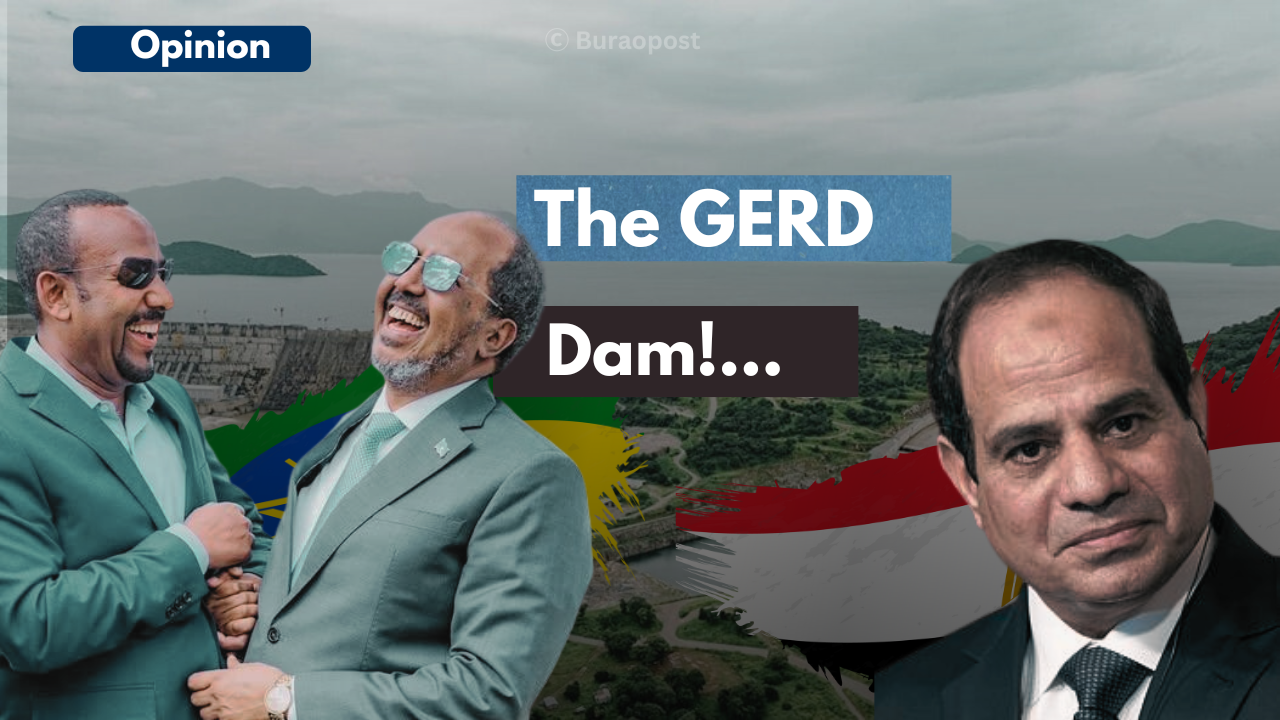
In the heart of the GERD crisis, Hassan Sheikh's stance sends shockwaves through Cairo as Egypt feels betrayed and Ethiopia celebrates a historic triumph. © Buraopost
×
![Enlarged view of GERD crisis diplomatic tensions]()
Subscribe to BBN Daily
Join our newsletter for the latest news and updates, delivered straight to your inbox.
Thank You!
We've received your request. Please check your email to confirm your subscription.
September 9, 2025 – The growing conflict between Egypt and Ethiopia over the Grand Ethiopian Renaissance Dam (GERD) has become one of the most explosive disputes in Africa, threatening not only the stability of the Nile basin but also reshaping the politics of the Horn of Africa. At the center of this storm stands Somali President Hassan Sheikh Mohamud, whose moves have left Cairo feeling misled and betrayed at a critical moment in the region’s history.
For Egypt, the GERD is an existential threat. Nearly 90 percent of its water supply comes from the Nile, and any attempt by Ethiopia to control the flow is seen in Cairo as a direct assault on its national security. Ethiopia, on the other hand, views the dam as a historic project that will bring electricity, development, and sovereignty to a nation long denied control over its natural resources. The confrontation between the two countries has dragged on for years, with failed negotiations, mounting rhetoric, and rising military tension.
As Ethiopia pushed forward with the dam’s construction, Egypt looked southward, seeking to expand its influence across the Horn of Africa. Somalia became a key battleground in this strategy. Cairo poured resources, diplomacy, and promises into Mogadishu, aiming to secure Somalia as a reliable ally against Ethiopia. In particular, Egypt worked aggressively to ensure that President Hassan Sheikh Mohamud would not attend the GERD inauguration, knowing that his presence would send a signal of regional acceptance of Ethiopia’s controversial project.
The pressure was immense. Egypt used every tool at its disposal, from leveraging its role in peacekeeping operations in Somalia to offering increased political and economic backing. Cairo’s objective was clear: Somalia had to remain in its camp, opposing Ethiopia’s moves and strengthening the Arab League’s rejection of the dam. Eventually, Egypt succeeded—at least on the surface. When Ethiopia held its grand ceremony to celebrate the GERD, Hassan Sheikh was absent, a moment Cairo hailed as proof that its diplomacy could still deliver victories in the Horn.
But the reality was more complicated. Even though Hassan Sheikh skipped the ceremony, he soon delivered a powerful and sensitive statement that sent shockwaves through Cairo. The Somali president acknowledged Ethiopia’s sovereign right to construct the GERD, directly undermining Egypt’s core argument on the international stage. For Egyptian leaders, this was nothing short of a betrayal. They had invested heavily in shielding Somalia from Ethiopia’s influence, only to find Mogadishu signaling sympathy for Addis Ababa’s cause.
The situation worsened when Ethiopia struck a historic deal with Somaliland, granting it recognition in exchange for access to the Red Sea. For Hargeisa, the agreement was a long-awaited breakthrough, a chance to gain international legitimacy. For Ethiopia, it was a bold strategic move to expand its reach to the sea. But for Egypt, it was a disaster. Cairo immediately rejected the deal, standing shoulder to shoulder with Mogadishu in defense of Somalia’s territorial claims. Egypt’s opposition was not only about supporting Somalia—it was about cutting off Ethiopia’s attempt to strengthen its hand in the Red Sea and the Horn of Africa.
Yet in doing so, Egypt backed Somalia more than Somaliland, effectively deepening its reliance on Hassan Sheikh. And here lies the paradox: the very leader Egypt supported so strongly, the same president it shielded from Ethiopian influence, turned around and undercut Cairo’s position by validating Ethiopia’s right to the GERD. This contradiction exposed the limits of Egypt’s strategy and left many in Cairo questioning whether Somalia could ever be trusted as a true ally.
Meanwhile, Somaliland has paid the heaviest price for these regional power games. The recognition it hoped to gain has only brought backlash. Egypt, backed by other Arab League states, strongly opposed the Ethiopia-Somaliland deal, isolating Hargeisa further. Instead of breaking through into international legitimacy, Somaliland now faces diplomatic sanctions of legitimacy, its ambitions stalled and its future caught in the crossfire between two African giants.
The fallout from Hassan Sheikh’s stance is still being felt. In Cairo, officials quietly express frustration that years of investment in Somalia yielded little more than symbolic victories. Ethiopia, though challenged, has continued to expand its influence, using the GERD and the Somaliland deal to project power across the region. Somalia, for its part, appears to have played both sides—taking Egypt’s support while acknowledging Ethiopia’s rights.
The GERD dispute is no longer just a water conflict between two nations. It has become a regional drama that shapes alliances, tests loyalties, and exposes betrayals. Hassan Sheikh’s decision not to attend the dam’s inauguration may have pleased Egypt in the short term, but his later speech marked a turning point—a moment Cairo will not forget. To many in the region, it looked like a calculated double game. To Egypt, it felt like a knife in the back.
As the dust settles, one question remains unanswered: what did Somaliland gain from these clashes, and what did Somalia truly achieve by playing both sides? For now, Egypt is left to reflect on the bitter truth that even its closest allies can shift when the tides of the Nile—and the politics of the Horn of Africa—demand it.

