

SENDAI:
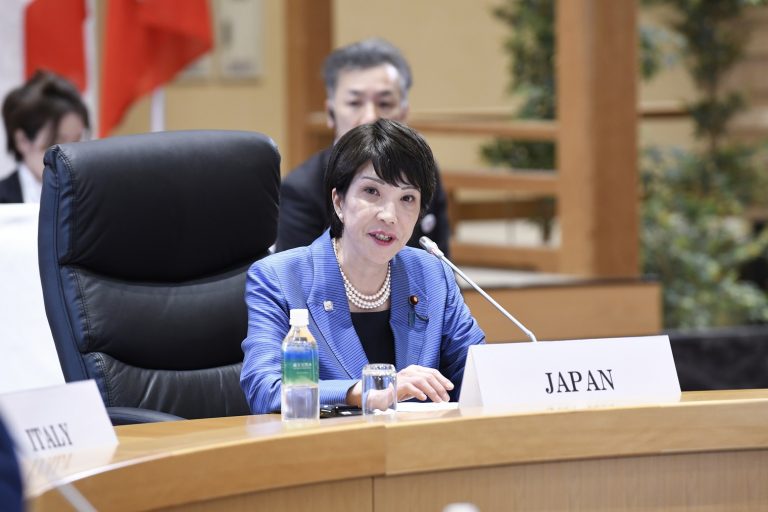
Japan is represented by Minister for Internal Affairs and Communications Sanae Takaichi represented Japan at the G7 S&T Ministers meeting in Sendai.
(Courtesy of the Cabinet Office of Japan)
© BBN
We published an article on March 30, 2026 outlining how political discussions in Japan were increasingly shifting toward the question of recognizing Somaliland as an independent state. At the time, the focus was on emerging debates among Japanese politicians and policy circles, where Somaliland was no longer being viewed only through a humanitarian or development lens, but as a potential strategic partner in a rapidly evolving geopolitical environment.
Since then, momentum around this issue has grown significantly. A widely circulated report by The Asahi Shimbun (click) brought Somaliland into the national spotlight in Japan, gaining viral attention for its detailed portrayal of the territory’s stability, governance, and long-standing democratic practices. The coverage did more than describe Somaliland as an unrecognized state—it reframed it as a functioning and reliable partner in a region often defined by instability.
What made the report particularly impactful in Japan was its emphasis on why Somaliland matters directly to Japanese national interests. The discussion moved beyond general international coverage and instead highlighted how Somaliland’s geographic position near the Bab el-Mandeb corridor and across from Yemen places it at the center of global maritime security. For Japan, a country heavily dependent on secure shipping lanes for energy imports and trade, this reality carries significant strategic weight.
The growing narrative inside Japan now connects Somaliland’s internal stability with broader economic and security considerations. The country’s consistent record of peace, its locally built governance system, and its democratic elections are increasingly being interpreted not just as achievements, but as assets that align with Japan’s long-term interests in the Horn of Africa. This represents a notable shift from past approaches where such regions were engaged primarily through aid and multilateral frameworks.
In addition, Somaliland’s expanding regional relevance—particularly following developments involving Ethiopia and access to the Red Sea—has reinforced its geopolitical importance. Japanese observers are increasingly recognizing that influence in this corridor requires reliable partners on the ground, and Somaliland is being discussed in that context more openly than before.
The result is a clear change in tone. What began as a cautious political discussion has evolved into a broader national conversation, amplified by mainstream media and public interest. The viral spread of the Asahi report demonstrates that Somaliland is no longer a distant or obscure topic in Japan, but one tied directly to questions of economic security, maritime stability, and strategic positioning.
Taken together, these developments indicate that the idea of Japan recognizing Somaliland is no longer a marginal concept. It is gaining traction through a combination of political debate, media influence, and strategic necessity—marking the strongest momentum yet toward a potential shift in Japan’s approach to Somaliland.

