

© Horn Observer
Somaliland reaffirms its full sovereignty over airspace and visa control, saying that Mogadishu’s pressure will only strengthen its recognition and international standing.
Subscribe to BBN Daily
Thank You!
We've received your request. Please check your email to confirm your subscription.
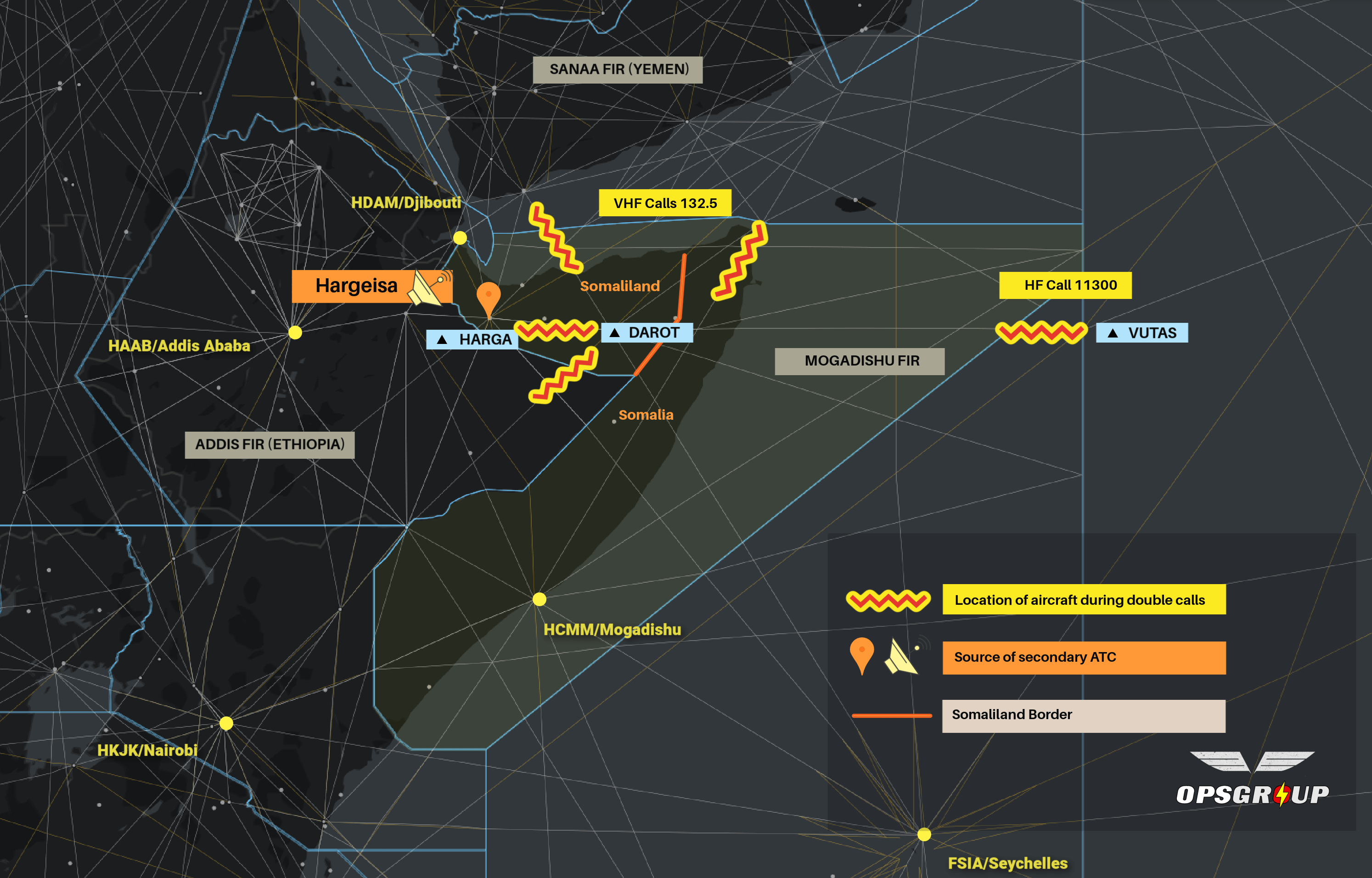
Hargeisa — A new diplomatic clash has emerged between Somaliland and Somalia after both governments issued conflicting statements on the control of airspace and eVisa systems. The disagreement has quickly become a symbol of the broader struggle between Somaliland’s long-standing self-governance and Somalia’s attempts to assert authority. Yet, for many in Somaliland, this pressure will only strengthen the country’s legitimacy and push it closer to international recognition.
The issue began on November 6, 2025, when the Somali Civil Aviation Authority (SCAA), operating under the Federal Government of Somalia, issued a circular declaring that it is the legally mandated authority responsible for managing all airspace under the Mogadishu Flight Information Region (FIR). The circular stated that all airspace users must obtain clearance from Mogadishu before entering or flying over any part of Somali territory, including Somaliland.
The Government of Somaliland immediately rejected this claim. On November 8, 2025, Somaliland’s Ministry of Civil Aviation and Airports Development (MOCAAD) released an official communiqué reaffirming the Republic’s sovereign right to control its airspace, borders, and national territory. The statement emphasized that Somaliland is the legitimate and sole authority responsible for the operation and administration of its airports and navigation systems, in full compliance with international civil aviation standards.
The communiqué followed a high-level airspace coordination meeting held in Hargeisa, where Somaliland officials stressed that the nation’s airspace sovereignty is not up for negotiation. “The Republic of Somaliland reaffirms its sovereign right to ensure the safety, security, and orderly management of all aviation activities within its national airspace and territory,” the government declared.
A day later, on November 9, 2025, the Somaliland Immigration and Border Control Department issued another official directive confirming that visas issued by Somalia would not be recognized for entry into Somaliland. The directive, signed by Commissioner Mohamed Hussein Farah, clarified that only visas or permits issued by the Somaliland government are valid. Foreign nationals are required to obtain a Somaliland visa upon arrival at Hargeisa Egal International Airport (HGA) or Berbera International Airport (BBO), or from accredited Somaliland embassies abroad. The directive was issued under Law No. 109/2025, granting full authority to Somaliland’s immigration system.
For over three decades, Somaliland has enjoyed peace, stability, and effective governance while operating independently from Somalia. Its institutions function normally, its security forces maintain order, and its democracy continues to grow stronger. Many observers argue that Somalia’s attempts to reclaim control over Somaliland’s affairs are politically driven and unlikely to succeed. Somaliland’s long record of self-administration and security gives it both the moral and legal foundation to manage its territory without interference.
Political analysts in Hargeisa believe that these renewed pressures from Mogadishu will ultimately boost Somaliland’s international standing. “Every attempt to undermine Somaliland’s sovereignty only highlights how stable and capable it truly is,” one analyst said. “The world can now see the clear difference between a functioning government and a struggling one.”
As tension builds, Somaliland remains confident that its calm and organized response will speak louder than political disputes. The country’s ability to govern itself peacefully, maintain border control, and manage airspace operations without external assistance continues to prove that Somaliland meets the practical standards of a sovereign state.
For many citizens, this moment represents not just a political challenge but an opportunity — a reminder that Somaliland’s steady peace and stability will only make its recognition stronger and more inevitable with time.

