

© TGS
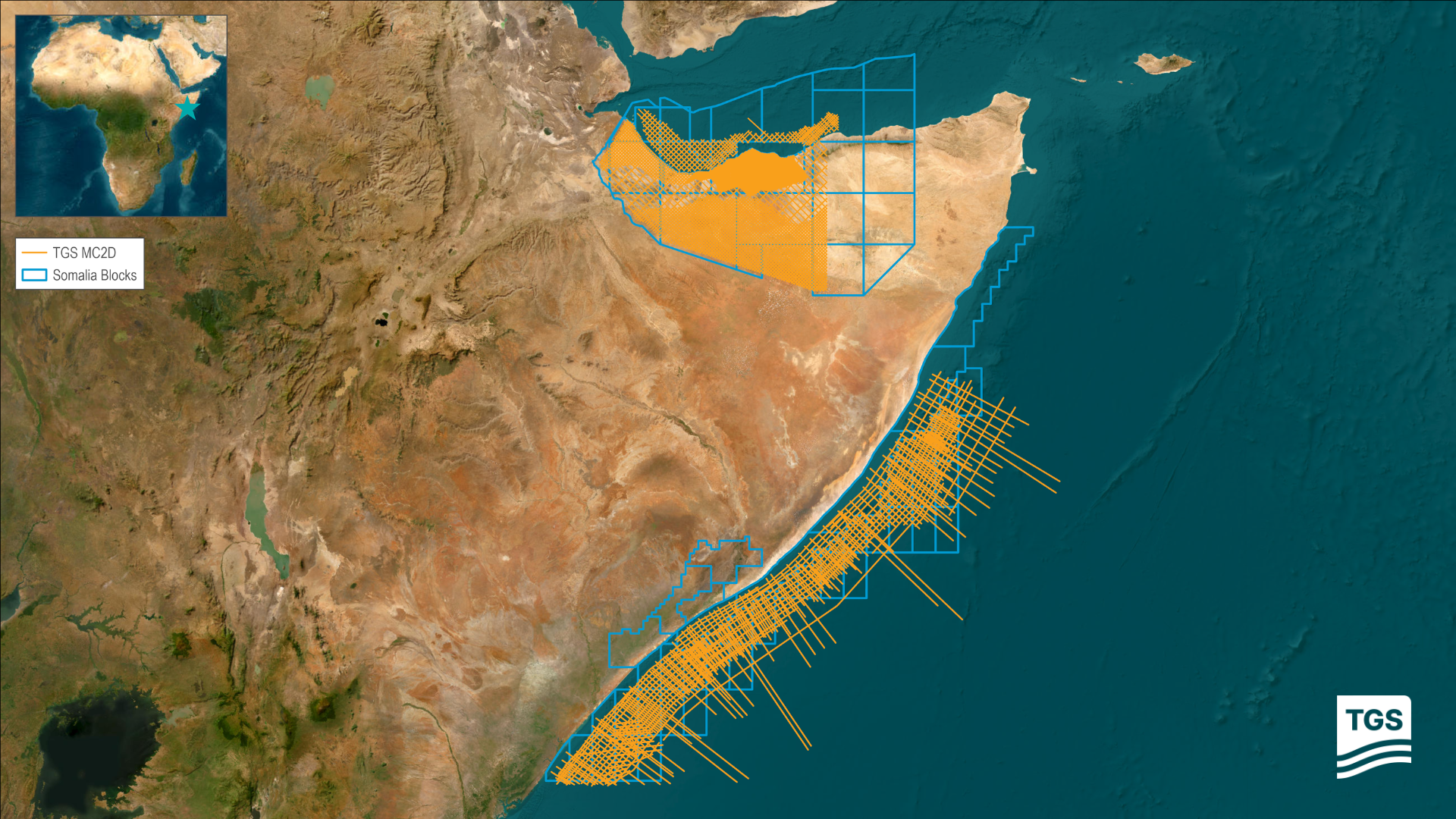
Official map released by TGS showing seismic and aeromagnetic data coverage across the Horn of Africa, including areas inside Somaliland that the company has listed as part of the offshore and onshore blocks it is marketing through the Federal Government of Somalia.
Tap the image or the background to close.
Subscribe to BBN Daily
Thank You!
We've received your request. Please check your email to confirm your subscription.
The recent agreement signed between the Federal Government of Somalia and the Norway-based energy data company TGS-NOPEC has sparked significant concern across Somaliland, as the deal directly involves geophysical and aeromagnetic data originally collected from Somaliland’s own territory and offshore basins. The agreement, which grants TGS the rights to market and license offshore energy data to global companies, mirrors previous attempts by Somalia to exert authority over Somaliland’s airspace, and now threatens to undermine Somaliland’s sovereignty over its natural resources.
TGS has long possessed a considerable portion of Somaliland’s early oil exploration data, gathered during the administration of former President Dahir Rayaale Kaahin and later renewed by successive Somaliland governments in the interest of further exploration. What makes the current development alarming is that this same data is now being handed to Somalia, enabling Mogadishu to market it as if it were its own. The move grants Somalia access to potential revenues from any seismic information or exploration activity involving Somaliland’s land and sea. It also jeopardizes Somaliland’s control over the exploration rights of its own hydrocarbon potential, effectively sidelining years of independent work carried out by Somaliland in establishing its resource governance.
The risk contained in this agreement is profound. By transferring marketing and licensing authority to Somalia, TGS indirectly recognizes Mogadishu’s claim over regions and offshore basins that fall fully within Somaliland’s internationally documented borders. If left unchallenged, this approach could embolden further attempts to weaken Somaliland’s autonomy by enabling foreign states and companies to invest in Somaliland territories without consultation or consent from Hargeisa.
Somaliland’s government has not yet issued an official statement regarding the agreement, but swift action is essential. Delayed responses in the past — most notably in the case of Somaliland’s airspace dispute — resulted in long-term political complications that still burden Somaliland’s people today. A clear, firm, and strongly articulated reaction is necessary to prevent this energy deal from becoming another long-standing challenge imposed on Somaliland’s sovereignty.
It remains uncertain whether foreign companies would dare operate inside Somaliland under a contract signed with Somalia. On land, such operations would face inevitable legal blockage and security risks due to Somaliland’s complete administrative and territorial control. However, the maritime zones require strategic attention, as naval enforcement is more complex and therefore presents a potential opening for unauthorized activity if Somaliland does not act decisively. Strengthening coastal protection and asserting maritime authority will be crucial in safeguarding the offshore resources that are central to Somaliland’s future economic prospects.
The agreement also raises questions about TGS itself. By sharing historical Somaliland data with Somalia, the company appears to violate the spirit of its earlier commitments made directly with Somaliland. The breach highlights the need for Somaliland to reassess its partnerships, enforce its contractual rights, and demand accountability for any unauthorized transfer of its national resource data.
As Somalia positions itself to benefit from licensing offshore blocks using TGS’ 2D seismic and aeromagnetic data covering over 46,000 kilometers of lines and more than 50,000 kilometers of magnetic surveys, Somaliland must treat this as an urgent national matter. Allowing Somalia to profit from Somaliland’s natural wealth — whether through data sales or future exploration contracts — would set a dangerous precedent with long-term consequences.
Somaliland now stands at a decisive moment. Defending its territorial rights, its natural resources, and the integrity of its historical agreements is not only a matter of sovereignty but a responsibility toward future generations. A timely official response, legal measures, diplomatic engagement, and strong collaboration with international partners will determine whether Somaliland safeguards its rightful ownership of its land and sea — or whether external forces, through deals like this, attempt to rewrite that reality.

