


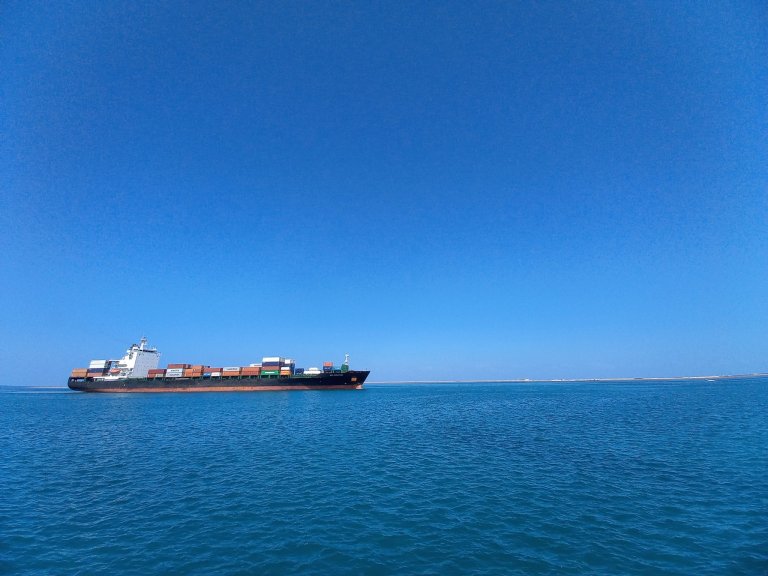
A view of Somaliland's coastline along the Gulf of Aden, reflecting the nation's maritime strength and stability.
×
![Enlarged view of Somaliland's Gulf of Aden coastline]()
Subscribe to BBN Daily
Join our newsletter for the latest news and updates, delivered straight to your inbox.
Thank You!
We've received your request. Please check your email to confirm your subscription.
For more than three decades, Somaliland has quietly built what many call the most peaceful, democratic, and stable nation in the Horn of Africa — yet it still remains officially unrecognized on most world maps. This reality is changing, as international media, including WION News, have started to highlight Somaliland’s growing influence and its control over a key maritime route along the Gulf of Aden. The report noted how Somaliland’s progress and self-governance make it distinctly different from Somalia, whose challenges continue to draw international concern.
WION described Somaliland as a country that “controls an ocean but doesn’t officially exist on world maps,” drawing attention to how this self-reliant nation manages its own affairs independently from Mogadishu. The report emphasized that Somaliland has built a functioning democracy, holds regular elections, and ensures peace — achievements that have made it stand out in the region. Day by day, Somaliland’s long journey toward full recognition is gaining momentum, supported by partnerships, good governance, and the confidence of its people.
Somaliland declared the restoration of its independence in 1991, after the collapse of the Somali military regime. Since then, it has maintained peace, developed democratic institutions, held multiple free elections, and built its own army, currency, and administrative system — all without international recognition or direct foreign assistance. For the people of Somaliland, the journey has never been about waiting for approval, but proving through action that sovereignty is earned through stability, service, and leadership.
The world is now beginning to notice what Somalilanders have always known. From Hargeisa to Berbera, the country’s progress is visible and tangible. The reconstruction of Berbera Port, the modernisation of the airport, and the construction of new roads linking cities and coastal areas all stand as symbols of a functioning state. The government’s ongoing investment in education, health care, and digital governance systems further highlight its maturity.
Somaliland’s coastline, stretching more than 850 kilometres along the Gulf of Aden, places it in a position of immense strategic value. This sea route connects Africa to the Middle East and Asia, serving as one of the busiest shipping corridors in the world. WION’s report explained that Somaliland, unlike Somalia, has managed its coast responsibly, ensuring maritime security and curbing illegal fishing and piracy. Through its Coast Guard, the country has become a partner in protecting international trade, even without recognition. This maritime control proves Somaliland’s ability to act as a responsible and sovereign state.
Recent developments have further strengthened Somaliland’s visibility on the world stage. The understanding signed with Ethiopia in early 2024 demonstrated that Hargeisa is ready to engage in regional diplomacy on equal terms. The proposed arrangement aimed to provide Ethiopia access to the Red Sea through Somaliland’s waters, while recognizing the sovereignty that Somaliland has exercised for decades. Although the agreement faced pressure from some regional actors, it succeeded in showing that Somaliland’s position cannot be ignored in the political and economic future of the Horn of Africa.
Similarly, the partnership with Taiwan represents another milestone in Somaliland’s global outreach. Both nations share a unique experience of functioning as self-governing democracies without widespread recognition. The cooperation between Somaliland and Taiwan in technology, education, and maritime security is based on mutual respect and shared values. It is a relationship that demonstrates Somaliland’s readiness to build meaningful partnerships beyond traditional diplomacy.
Somaliland’s leadership has remained clear and consistent in its message: the country seeks peaceful relations with all its neighbors, including Somalia, but recognition is not something to be negotiated away. WION noted that Somaliland’s system of governance, peace, and accountability has no comparison within Somalia, which continues to struggle with insecurity and political instability. Somaliland’s case for recognition is based on facts — not division — and its achievements speak louder than any external claim.
The people of Somaliland have also played a central role in building this stability. Communities across all six regions — Awdal, Maroodi Jeex, Togdheer, Sanaag, Sool, and Sahil — have contributed to maintaining local peace and national unity. Clan elders, civil society groups, and youth organizations have been the backbone of reconciliation and progress. This spirit of unity and self-reliance is what has kept Somaliland strong, even when ignored by the international community.
Around the world, observers are now paying attention. Governments, think tanks, and international media are increasingly acknowledging Somaliland’s achievements. The country’s democratic elections, free press, and women’s participation in public life stand in contrast to the challenges faced in other parts of the region. These realities make Somaliland not only a model of peace but also a potential partner in regional stability and maritime cooperation.
As global interest grows, so does the confidence of Somalilanders themselves. The younger generation — educated, connected, and ambitious — sees Somaliland’s recognition not as a distant dream, but as a right that has already been earned. From universities in Hargeisa to innovation hubs in Berbera, youth-led initiatives are transforming ideas into action. Their optimism reflects the national spirit: a belief that Somaliland’s independence is not a question of if, but when.
It is the year of Somaliland — the year when the international community can no longer overlook a nation that governs itself responsibly, protects a vital maritime corridor, and stands as an example of African self-determination. As WION highlighted, Somaliland’s story is not about separation — it is about survival, progress, and dignity. The people of Somaliland have waited long enough. Their history, sacrifices, and progress have earned them the right to be recognized as what they already are: a proud, peaceful, and independent state.

