

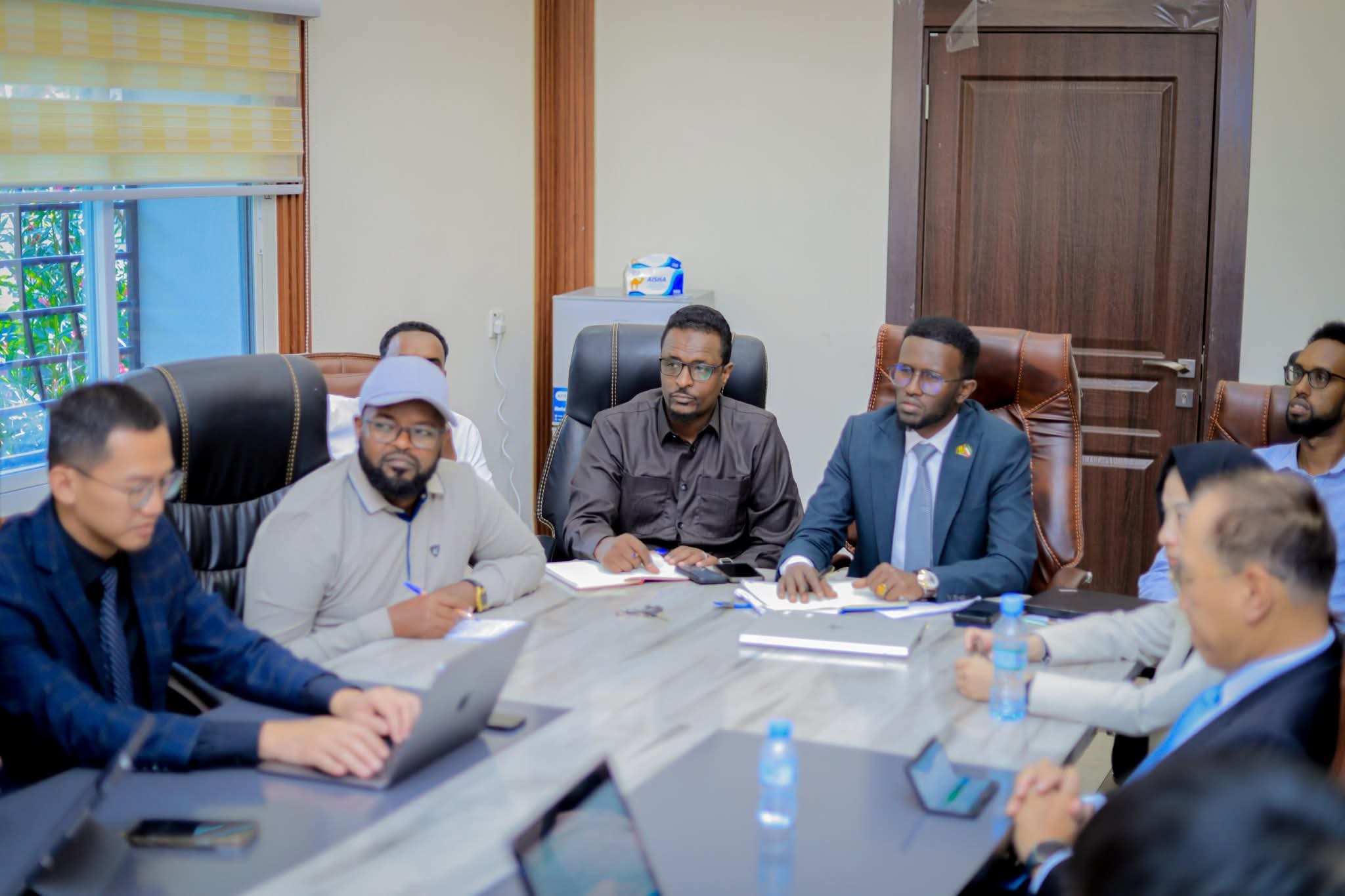
Director-General of Somaliland's Ministry of Health Development, Dr. Ahmed Mahmoud Jama, meets with senior officials from the Taiwan Mission in Hargeisa to strengthen healthcare cooperation.
×
![Enlarged view of healthcare cooperation meeting between Somaliland and Taiwan]()
Subscribe to BBN Daily
Join our newsletter for the latest news and updates, delivered straight to your inbox.
Thank You!
We've received your request. Please check your email to confirm your subscription.
Hargeisa, Somaliland- Republic of Somaliland continues to build its international partnerships in critical development sectors, and healthcare remains at the forefront of these efforts. In a landmark meeting that took place in Hargeisa, the Director-General of the Ministry of Health Development, Dr. Ahmed Mahmoud Jama, welcomed senior officials from the Taiwan Mission to discuss existing health projects, future opportunities, and the long-term vision of cooperation between Somaliland and Taiwan in strengthening healthcare services across the Horn of Africa.
This meeting, though framed as an official courtesy call, carried far more weight than a standard diplomatic exchange. It was a reflection of Somaliland’s determination to expand its international network, while also underscoring Taiwan’s commitment to supporting Somaliland in essential service sectors.
For Somaliland, a self-declared republic seeking international recognition since 1991, partnerships with friendly nations such as Taiwan are critical. While the global community has yet to formally acknowledge Somaliland’s independence, Taiwan has emerged as one of the few partners willing to engage deeply and practically. Both sides understand the value of this cooperation: Somaliland benefits from Taiwan’s technical expertise, financial support, and access to advanced medical knowledge, while Taiwan strengthens its diplomatic footprint in Africa by demonstrating solidarity with emerging democracies.
Healthcare has been at the center of this relationship since the establishment of Taiwan’s mission in Somaliland in 2020. Over the past five years, Taiwan has funded and supported numerous initiatives ranging from maternal health programs to the provision of medical equipment and training for healthcare professionals. This collaboration has been praised locally as one of the most tangible and impactful areas of Somaliland–Taiwan relations.
The discussions held at the Ministry of Health Development’s headquarters in Hargeisa brought together some of Somaliland’s top health officials, including the Directors of Planning and Policy Development, General Health, and the Head of the Emergency Response Unit. Their presence signaled the seriousness of the dialogue, which revolved around evaluating ongoing projects and identifying new areas for expansion.
Officials from the Taiwan Mission delivered a comprehensive report highlighting progress in several key areas. These included community-based healthcare initiatives aimed at reaching rural populations, capacity-building programs for doctors and nurses, and the modernization of medical facilities. Taiwan has been instrumental in equipping hospitals with advanced diagnostic tools and life-saving technologies, which are often difficult to procure in Somaliland due to budgetary and logistical challenges.
Equally significant was Taiwan’s assessment of the challenges facing Somaliland’s healthcare system. Among these are limited infrastructure, shortage of trained medical staff, and the strain placed on public hospitals due to rapid population growth in urban areas such as Hargeisa and Burao. By presenting a candid evaluation, Taiwan demonstrated not only its technical knowledge but also its readiness to work alongside Somaliland to address systemic issues.
In his remarks, Dr. Ahmed Mahmoud Jama expressed heartfelt gratitude to the Taiwan Mission for its consistent support. He noted that Taiwan’s contributions are not symbolic, but rather deeply practical and visible in the lives of Somaliland citizens. “The projects we have implemented together are directly saving lives and improving the well-being of our communities,” he reportedly said.
Dr. Jama further emphasized the need to scale up cooperation in response to Somaliland’s growing health challenges. The country, though relatively peaceful compared to its neighbors, faces pressing issues including maternal mortality, infectious diseases, and an underfunded public health infrastructure. “Expanding this cooperation is not just desirable, it is essential,” Dr. Jama underlined, pointing out that Taiwan’s experience could play a pivotal role in helping Somaliland achieve a resilient and sustainable health system.
Taiwan’s healthcare system is often ranked among the best in the world, with its universal health coverage serving as a model for many developing countries. This makes its expertise particularly valuable to Somaliland, which is still in the early stages of building a comprehensive health policy framework. Since 2020, Taiwan has launched multiple programs in Somaliland, including medical missions and exchanges, maternal and child health programs, equipment and technology donations, and capacity building opportunities for local doctors and nurses. These programs not only fill urgent gaps but also contribute to long-term institutional strengthening. For many Somalilanders, the Taiwan partnership has become synonymous with progress in healthcare.
While the meeting was focused on healthcare, its implications extend far beyond the medical sector. It illustrates the broader strategy of Somaliland to seek out strong, practical partnerships in the absence of formal international recognition. By aligning with Taiwan—a country itself facing diplomatic isolation—Somaliland has found a like-minded ally that values substance over formality. For Taiwan, the partnership offers an opportunity to demonstrate its relevance in Africa, a continent where China has heavily invested in healthcare diplomacy. By contributing to Somaliland’s health sector, Taiwan not only strengthens bilateral relations but also showcases its capacity to deliver impactful development assistance.
Despite the achievements, both sides acknowledge that challenges remain. Somaliland continues to struggle with inadequate infrastructure, limited budget allocations, and an overburdened health workforce. Rural areas, where the majority of the population lives, often lack access to even basic healthcare services. The meeting underscored the need for a comprehensive roadmap that addresses these structural issues. Potential areas for future collaboration include telemedicine and digital health, specialized training programs, infrastructure development, and emergency preparedness. By setting clear goals, the partnership can evolve from project-based assistance to a more integrated, strategic collaboration.
The meeting between the Somaliland Ministry of Health Development and the Taiwan Mission may appear routine in diplomatic terms, but its significance cannot be overstated. It is a testament to the enduring value of international cooperation in improving human well-being. For Somaliland, this partnership represents hope—hope for better hospitals, more skilled doctors, and healthier communities. For Taiwan, it reflects a chance to showcase its global solidarity and strengthen its diplomatic presence in Africa.
As both sides committed to deepening their cooperation, the message was clear: the future of Somaliland’s healthcare system will be brighter if built on partnerships rooted in trust, shared values, and mutual benefit. The journey toward universal healthcare in Somaliland is long, but with allies like Taiwan, it is a journey with promise.

