

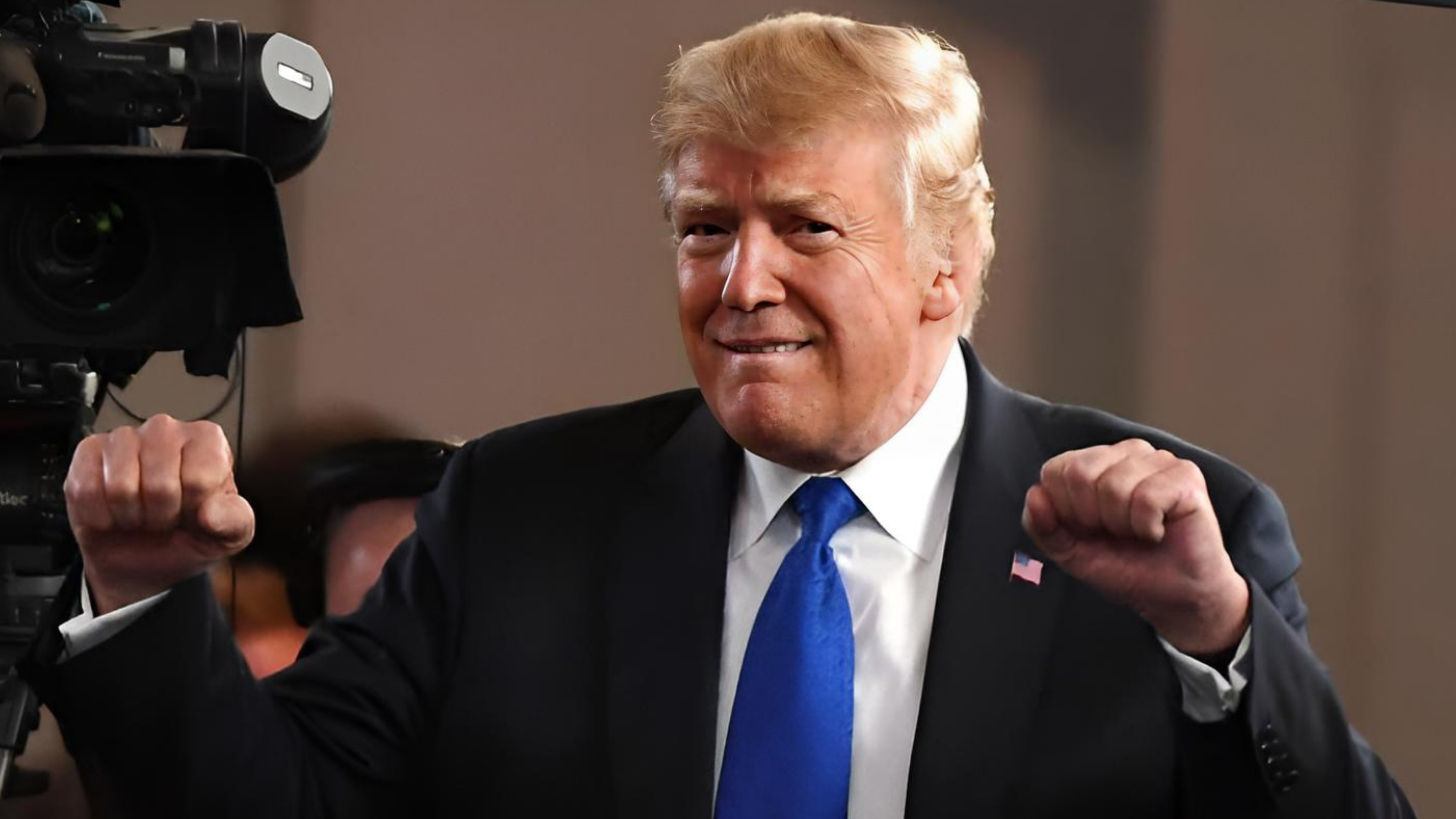
U.S. President Donald Trump reacts to the crowd after being interviewed by Fox News Channel and radio talk show host Sean Hannity (not pictured) before a campaign rally at the Las Vegas Convention Center on September 20, 2018 in Las Vegas, Nevada. © Getty Images
×
![Enlarged view of President Trump at Las Vegas rally]()
According to Fox News, Somaliland stands out as a stable and democratic partner in a highly volatile region. Geographically, the self-declared republic sits on the southern edge of the Gulf of Aden, one of the busiest maritime routes in the world. Roughly 30 percent of global commercial shipping passes through the waters adjacent to Somaliland, making the area a vital hub for international trade and global supply chains.
The report further explained that Somaliland has managed to distance itself from the turmoil that has gripped much of the Horn of Africa. While neighboring Somalia continues to face instability and the presence of extremist groups such as al-Shabaab, Somaliland has built a reputation as a safe, self-governing entity that has maintained three decades of relative peace and democratic development.
In an interview with Fox News, Congressman Ted Cruz, who chairs the House Subcommittee on African Affairs, suggested that U.S. recognition of Somaliland is “entirely possible” under a Trump administration. He described Somaliland as a “valuable friend of the United States” that aligns closely with Washington’s strategic interests in the Horn of Africa. Recognition, he added, would not only strengthen America’s regional presence but also send a clear message to rival powers expanding their reach in Africa.
The Fox News analysis also pointed to the growing competition in Djibouti, where the United States operates its largest military base in Africa. The base, known as Camp Lemonnier, has long been critical for U.S. counterterrorism operations and maritime security. However, the report warned that China’s establishment of its own base in Djibouti poses a direct challenge to Washington’s influence in the region. This, according to the report, underscores the importance of exploring new strategic partnerships such as Somaliland.
Beyond security concerns, the report highlighted Somaliland’s progress in governance, civil society, and economic development. Unlike many fragile states in the region, Somaliland has conducted multiple democratic elections, established its own currency, and built functioning institutions without significant foreign aid. These achievements, the report argued, demonstrate that Somaliland has become a “rare example of homegrown stability” in Africa.
Despite the optimism expressed by some U.S. lawmakers, the U.S. State Department maintained in comments to Fox News that there are no formal talks underway regarding Somaliland’s recognition. However, the department acknowledged ongoing communication and cooperation with Somaliland officials, signaling that Washington is not closing the door on deeper engagement in the future.
Analysts quoted in the report suggested that recognition of Somaliland could provide the United States with a reliable partner in securing maritime routes, monitoring extremist threats, and countering the presence of rival powers in the Red Sea and Gulf of Aden corridor.
For Somaliland, such recognition would represent a historic milestone after more than 30 years of self-declared independence and efforts to gain legitimacy on the international stage. While the outcome remains uncertain, the discussion itself marks a notable shift in how Somaliland is increasingly viewed in Washington’s strategic

