

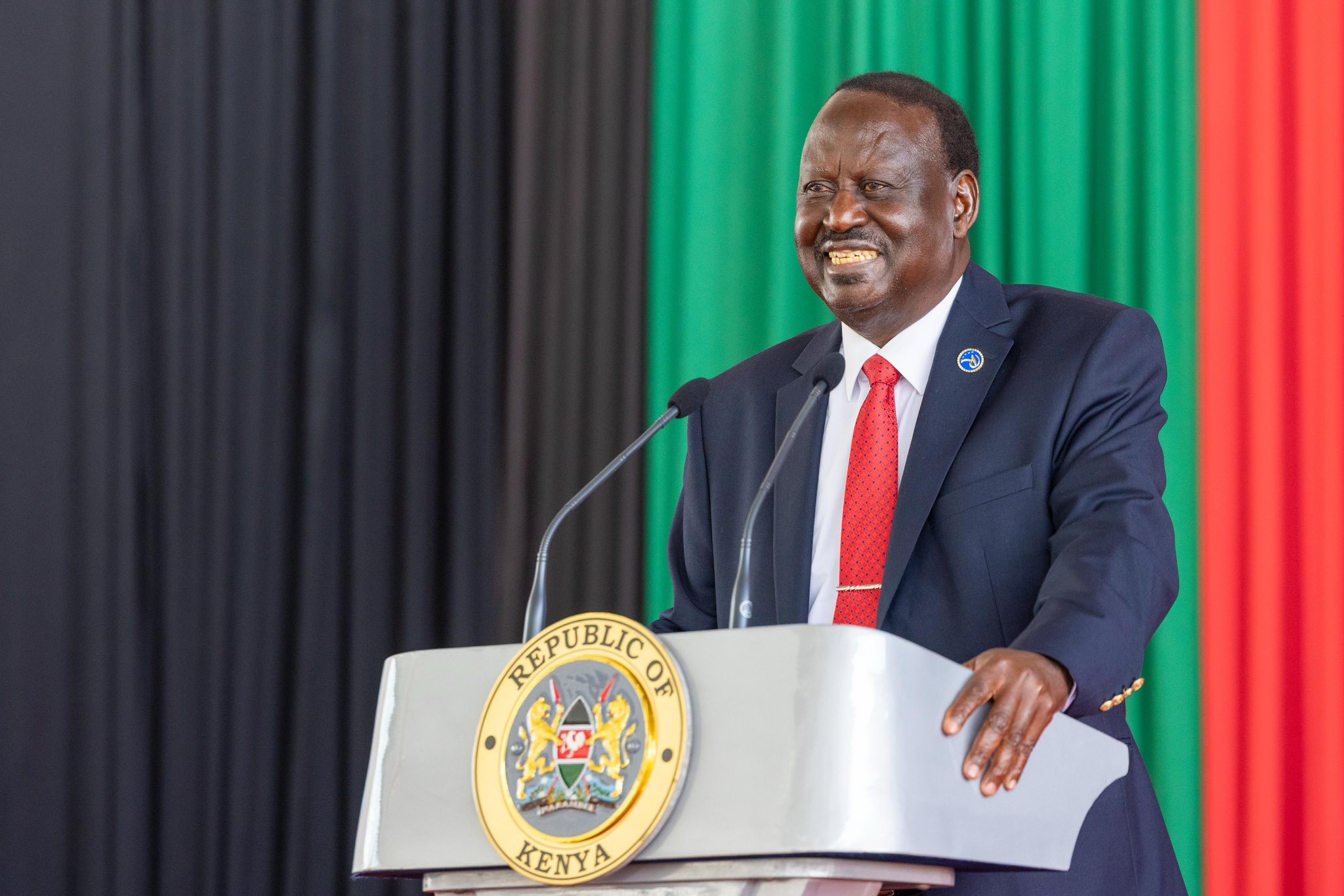
Former Kenyan Prime Minister Raila Odinga, a visionary reformist and close friend to Somaliland, remembered for his lifelong fight for democracy and regional unity.
×
![Enlarged view of Raila Odinga]()
Raila Odinga’s political journey defined the modern history of Kenya. For more than four decades, he stood at the heart of Kenya’s struggles, reforms, and unity. He was a fearless opposition leader, a reformer, and a symbol of resilience who fought against single-party rule under Daniel arap Moi, enduring imprisonment and exile for standing up to dictatorship. He was among the few African leaders who consistently championed democratic governance, constitutional reforms, and social justice.
His leadership and courage paved the way for the reintroduction of multi-party democracy in Kenya during the 1990s. Later, as Prime Minister from 2008 to 2013, Raila Odinga played a crucial role in stabilizing the country following the 2007 post-election violence, which left deep divisions in Kenya’s social fabric. His cooperation in forming a unity government helped restore calm and rebuild public trust. He worked tirelessly to implement the 2010 Constitution of Kenya, a landmark reform that introduced devolution, stronger institutions, and greater public participation in governance. This Constitution remains one of the strongest legacies of his political career and continues to shape the democratic character of Kenya today.
Odinga was also known as “Baba” — the father figure — among millions of Kenyans who viewed him as the voice of the common man. Even though he never became president despite five attempts, his political influence was unmatched. He mentored generations of leaders, inspired countless citizens to stand up for justice, and gave Kenya a vision of an inclusive and accountable state. His ability to reconcile, negotiate, and unify opposing sides in moments of national tension made him one of Africa’s most skilled political figures.
Beyond Kenya, Raila Odinga’s legacy reached across borders. He maintained deep respect among leaders in the Horn of Africa, including Somaliland, where he was seen as both a friend and an ally. Odinga had close relations with the Somaliland government and had personally hosted President Abdirahman Mohamed Abdillahi (Irro) in Nairobi. His meeting with the Somaliland leader was widely covered by regional media, where Odinga expressed admiration for Somaliland’s democratic progress and its peaceful governance model. For Somalilanders, his words were more than a diplomatic gesture — they symbolized recognition from one of Africa’s leading statesmen.
Though Odinga never held formal authority to recognize Somaliland’s independence on behalf of Kenya, his public support gave moral and political weight to Somaliland’s cause. His endorsement encouraged discussions in Kenya and other African capitals about Somaliland’s right to self-determination. Many Somaliland citizens viewed him as a regional figure who understood their struggle for recognition and respected their achievements in peace and democracy.
The Government of Somaliland reacted swiftly to Odinga’s death, releasing official condolences and mourning the loss of a “great African friend and partner.” Public figures in Hargeisa and across the diaspora remembered his kindness, humility, and political wisdom. Odinga’s relationship with Somaliland reflected his broader commitment to African unity built on democracy, mutual respect, and progress rather than coercion or conflict.
Raila Odinga’s death leaves a vacuum in East African politics. His ability to unite people across ethnic, political, and national lines was rare. He represented hope for many who believed that leadership could be honest, compassionate, and visionary. His influence on Kenya’s transformation from autocracy to democracy will remain one of the most significant chapters in African political history.
For Somaliland, his memory will continue to inspire optimism and courage in their ongoing diplomatic journey. The friendship he built with Somaliland’s leaders will be remembered as a bridge of solidarity between two democratic societies seeking recognition, dignity, and peace. In life and in death, Raila Odinga stood for justice, democracy, and freedom — values that will forever bind the people of Kenya and Somaliland in mutual respect and admiration.

