

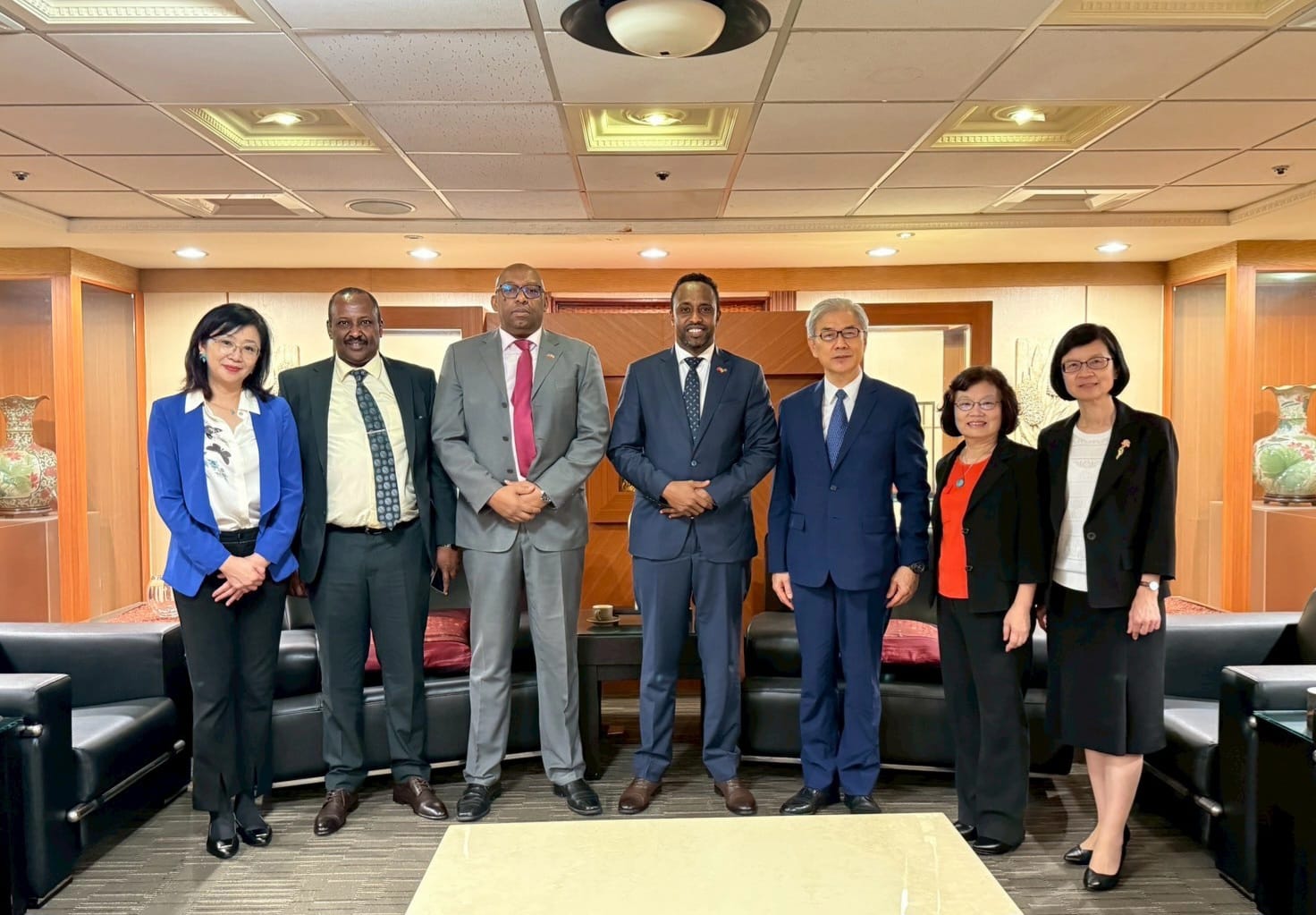
Governor Abdinasir A. Hersi of the Central Bank of Somaliland meets senior Taiwanese officials in Taipei to advance financial and diplomatic cooperation. © Buraopost
×
![Enlarged view of Somaliland-Taiwan financial meeting]()
Subscribe to BBN Daily
Join our newsletter for the latest news and updates, delivered straight to your inbox.
Thank You!
We've received your request. Please check your email to confirm your subscription.
The visit underscored the remarkable evolution of the Somaliland–Taiwan relationship, which began in 2019 as a bold diplomatic initiative and has since matured into a partnership rooted in trust, shared values, and mutual economic aspirations. Over the past six years, what started as an exchange of political goodwill has transformed into a multi-faceted collaboration that now includes trade, technology, and crucially, the modernization of Somaliland’s financial sector.
Governor Hersi opened the discussions by reflecting on the early days of the bilateral relationship. “I was among the pioneers who initiated the Somaliland–Taiwan partnership in 2019,” he said. “Today, that vision has grown into a reality defined by concrete achievements and expanding cooperation. Our nations understand that financial strength is the backbone of political stability and sustainable growth.” Officials on both sides echoed this sentiment, recognizing that their cooperation represents more than a conventional diplomatic engagement. For Somaliland, Taiwan offers not only technical expertise but also a model of resilience—an economy that has thrived despite limited international recognition. For Taiwan, the relationship reinforces its strategic presence in the Horn of Africa and demonstrates its ability to forge meaningful alliances in regions often overlooked by major powers.
Central to the talks were comprehensive plans to modernize Somaliland’s financial architecture. Governor Hersi and his delegation held in-depth consultations with the Central Bank of Taiwan, the Financial Supervisory Commission, and the Central Deposit Insurance Corporation. These meetings focused on developing human capital through training programs, staff exchanges, and technical assistance that will equip Somaliland’s financial institutions with world-class expertise; introducing advanced financial technology to improve payment systems, banking operations, and cross-border transactions; establishing effective regulatory and legal environments to ensure transparency, investor confidence, and compliance with international standards; and facilitating Somaliland’s entry into SWIFT and other international payment networks to break long-standing financial isolation.
These initiatives are not merely aspirational. According to Hersi, they represent a practical roadmap toward economic sovereignty. “Access to modern payment systems and robust financial oversight is essential for attracting foreign investment,” he explained. “This partnership with Taiwan provides Somaliland with the tools to achieve that goal.” A defining outcome of the trip was the agreement to sign formal Memoranda of Understanding with Taiwanese financial institutions. The Central Deposit Insurance Corporation is expected to be the first partner, assisting Somaliland in establishing a Deposit Protection Fund—an essential safeguard that protects depositors and bolsters public confidence in the banking system.
At CDIC headquarters, Hersi met with Chairman Tien-Mu Thomas Huang, President Annie Cheng, and Executive Vice President Yvonne Y. Fan. Discussions centered on best practices in deposit insurance, risk management, and financial crisis resolution. The parties expressed a shared commitment to formalizing their collaboration through an MoU in the coming months, a move anticipated to have far-reaching implications for Somaliland’s banking stability. Hersi was accompanied by key Somaliland representatives, including H.E. Mohamoud Adam Jama Galal, the country’s Ambassador to Taiwan, and Mr. Mohamoud Ahmed Mohamed, Senior Advisor to the Central Bank of Somaliland. Their participation underscored the high level of institutional backing for the initiatives discussed.
Taiwan’s Foreign Minister, through Deputy Minister Wu, reaffirmed Taiwan’s dedication to strengthening the partnership. Wu emphasized that Taiwan sees Somaliland as a vital ally in East Africa, particularly at a time when regional economic integration and digital transformation are reshaping the global financial landscape. “Taiwan values this special relationship,” Wu stated, pledging continued technical support, investment facilitation, and knowledge sharing. For Taiwan, deepening ties with Somaliland offers both symbolic and strategic advantages. It strengthens Taipei’s diplomatic outreach in Africa, where Beijing’s influence is strong, while highlighting Taiwan’s ability to provide tangible benefits to its partners. By helping Somaliland build a resilient financial sector, Taiwan also reinforces its reputation as a trusted development partner rather than a distant benefactor.
The significance of these agreements extends beyond banking. A modern financial system is critical to unlocking growth in Somaliland’s trade, manufacturing, and technology sectors. Economists note that improved access to global payment systems could boost foreign direct investment, lower remittance costs for the Somaliland diaspora, and empower small and medium-sized enterprises that form the backbone of the nation’s economy. Furthermore, the planned Deposit Protection Fund will encourage greater public participation in the banking sector. Currently, a significant portion of Somaliland’s economy operates informally, with limited use of formal banking services. Protecting depositors and ensuring financial stability could gradually draw more citizens into the regulated financial system, enhancing tax revenues and enabling more effective monetary policy.
Observers see the Somaliland–Taiwan collaboration as a potential model for other unrecognized or partially recognized states seeking economic development through strategic partnerships. Both territories face challenges in international diplomacy, yet they have found common ground in mutual respect and a shared belief in self-determination. Analysts also point to the symbolic nature of the relationship. By working together in finance and technology—sectors often dominated by global powers—Somaliland and Taiwan demonstrate that smaller players can shape their destinies through innovation and cooperation.
As the meetings concluded, Governor Hersi expressed optimism about the road ahead. “Strengthening our cooperation will drive sustainable economic growth in Somaliland while expanding Taiwan’s reach and partnerships in the Horn of Africa,” he said. “We are committed to building on the foundation we laid in 2019, overcoming our shared challenges, and creating a model partnership for others to follow.” The next steps include drafting the MoUs, scheduling technical exchanges between financial experts, and preparing a joint roadmap for Somaliland’s integration into international financial networks. Both sides expect these measures to begin within the next year, with tangible progress anticipated by late 2026.
For Somaliland, the agreement represents a turning point in its pursuit of global economic relevance. Despite lacking formal recognition from most of the international community, the self-declared republic has steadily built a reputation for stability, democratic governance, and entrepreneurial spirit. The partnership with Taiwan strengthens this narrative, offering a pathway toward financial modernization and broader economic engagement with the world. For Taiwan, it is another demonstration of how pragmatic diplomacy can yield meaningful results. By investing in Somaliland’s financial future, Taiwan not only supports a kindred partner but also showcases the power of cooperation in a time of shifting geopolitical alliances.
As both governments move forward, the message is clear: even in the face of political complexities, nations that share values of resilience, innovation, and mutual respect can craft partnerships that benefit their citizens and inspire the broader international community.

